


05
Sustainable Development is fully embedded in the HELLENiQ ENERGY Group's strategic planning, shaping business decisions, strengthening resilience, and driving long-term value creation for society, the economy, and the environment.
Introduction
The year 2025 marks the second consecutive year in which HELLENiQ ENERGY publishes its Sustainability Statement in accordance with the European Union’s Corporate Sustainability Reporting Directive (CSRD). The Statement contributes significantly to enhancing transparency and actively supports more meaningful dialogue with stakeholders by providing comprehensive qualitative information and quantitative data on all material sustainability topics.
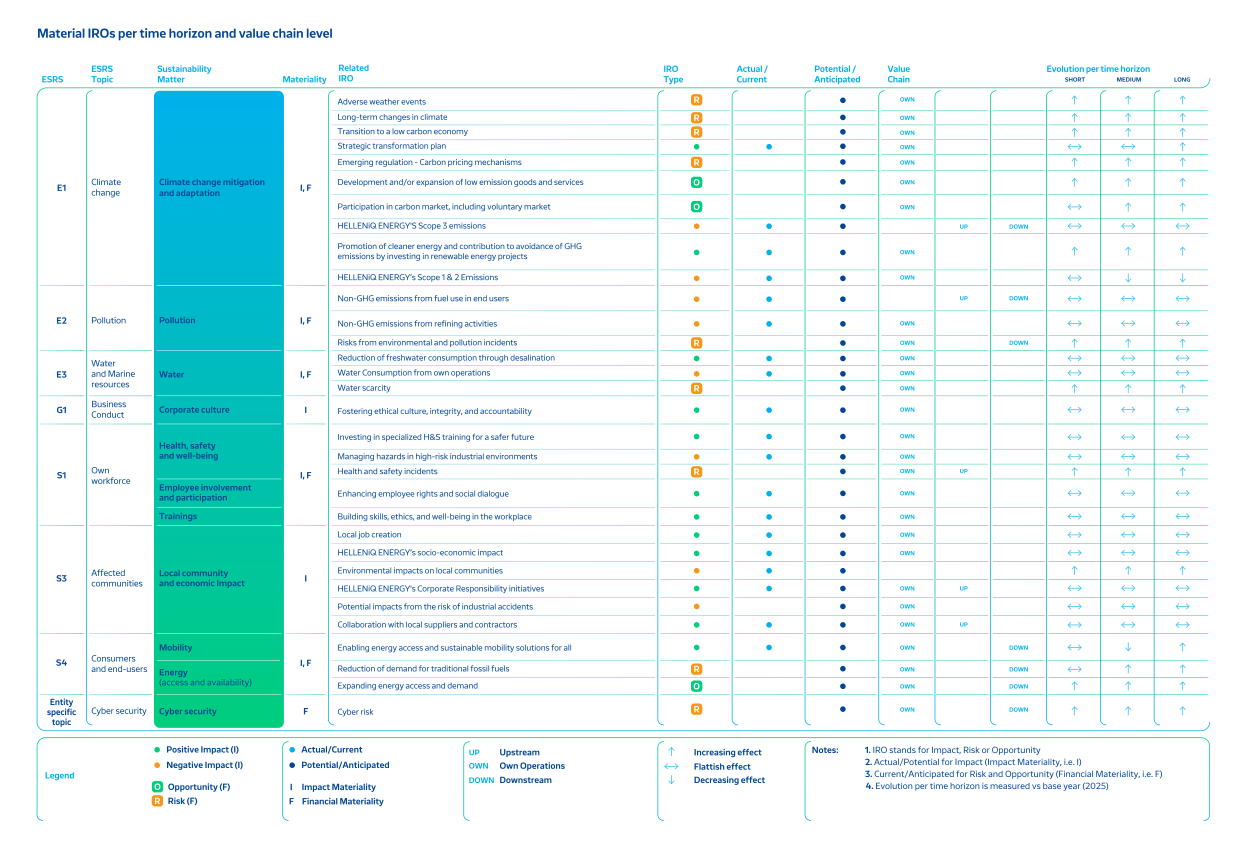
At the core of the Statement are the impacts, risks and opportunities (IRO) considered material, both from an impact materiality perspective—relating to impacts on the environment and society—and from a financial materiality perspective for the Group. The Statement includes information on strategy, policies, actions, metrics and targets across all material IRO, in accordance with the European Sustainability Reporting Standards (ESRS) under the Environmental, Social and Governance (ESG) pillars.
This section of the Annual Report presents the Group’s performance in ESG matters, with data consolidated at the Group level. A Double Materiality Assessment (DMA) of sustainability IRO was conducted in line with criteria aligned with the ESRS. The assessment encompassed the Group’s entire value chain and covered the current financial year 2025, as well as future time horizons, namely the short term (2026), medium term (2027–2030) and long term (2031–2036) horizon.
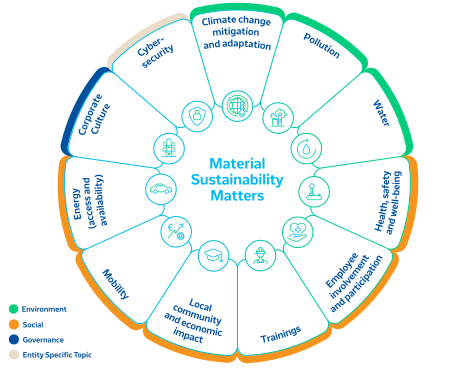
Taking into account all business activities, associated assets and business plans, HELLENiQ ENERGY identified 32 material impacts, risks and opportunities across 11 sustainability thematic areas (covering eight ESRS Sustainability Matters), as follows:
- Environmental (E): Climate change mitigation and adaptation, Pollution, Water.
- Social (S): Health, safety and well-being, Employee consultation and participation, Training, Local community and economic impact, Mobility, Energy (access and availability).
- Governance (G): Corporate culture, Cybersecurity.
There is a significant interconnection among these IRO throughout the value chain, predominantly within the Group’s own operations. This interdependency requires adaptations to strategy and the adoption of a comprehensive approach across multiple dimensions, including the resolution of operational challenges, the improvement of day-to-day operational processes, the strengthening of governance systems and the updating of risk management frameworks.
The results of the DMA have substantiated the necessity to advance and accelerate the energy transition, as outlined in the Group’s strategic plan, with the objective of effectively addressing prevailing challenges and leveraging emerging opportunities. Detailed information relating to governance procedures, strategic frameworks, management approaches, key performance indicators (KPIs) and established targets is presented comprehensively within this section.
As from the date of its consolidation into the Group’s financial statements, the performance of Enerwave, a subsidiary of the Group, will be taken into account in the calculation and presentation of the Group’s key performance indicators for the fiscal year 2025.
Indicatively, this section includes information and data related to:
- Total GHG emissions and the Group’s climate change mitigation plans, including a climate scenario assessment of the Group’s assets within the climate change adaptation management approach.
- Air emissions, water effluents, solid waste and circular economy.
- Sustainable management of water resources.
- Health and safety KPIs and targets, workforce-related indicators and the Group’s work-life balance management approach.
- The direct, indirect and induced positive impact and footprint on the Greek economy through interactions with suppliers, customers, consumers and affected communities, including the number of beneficiaries of corporate responsibility initiatives.
- The Group’s active engagement with consumers and end-users to enhance access to conventional and sustainable energy products and mobility services.
- The Group’s strategy for strengthening ethical culture, integrity and accountability, as well as addressing potential cybersecurity risks, such as data breaches.
Furthermore, disclosures related to Article 8 of the EU Taxonomy Regulation regarding the “eligible” activities for the Taxonomy and the environmentally sustainable “Taxonomy aligned” activities of the Group have been incorporated.
HELLENiQ ENERGY remains committed to the continuous enhancement of the completeness, clarity and comprehensibility of information on material environmental, social and governance matters. The integration of both impact and financial materiality into decision-making processes remains a key driver for strategic adaptation, the strengthening of the Group’s resilience and the advancement of sustainable development across the value chain.
Sustainability Policy
HELLENiQ ENERGY and its subsidiaries align their business activities with the advancement of the United Nations Sustainable Development Goals and the objectives of the European Green Deal. At the core of the Group’s strategy are key issues such as sustainable energy for all and climate neutrality, as well as the adoption of corporate governance principles that prioritize safe, accident-free and financially sustainable operations. These efforts are undertaken with due regard for environmental stewardship and social responsibility. Further information regarding the Sustainability Policy may be accessed through the official HELLENiQ ENERGY website.
Business Model
HELLENiQ ENERGY is a leading energy company in Southeastern Europe, engaged in a broad range of activities including refining, petrochemicals, fuels marketing, renewable energy, electricity generation, natural gas, electromobility, and hydrocarbon exploration and production. The Group’s business model—encompassing value creation, operational activities and key outcomes—is illustrated schematically below.
HELLENiQ ENERGY is among the leading energy companies in Southeast Europe.

Business model

ESG Goals
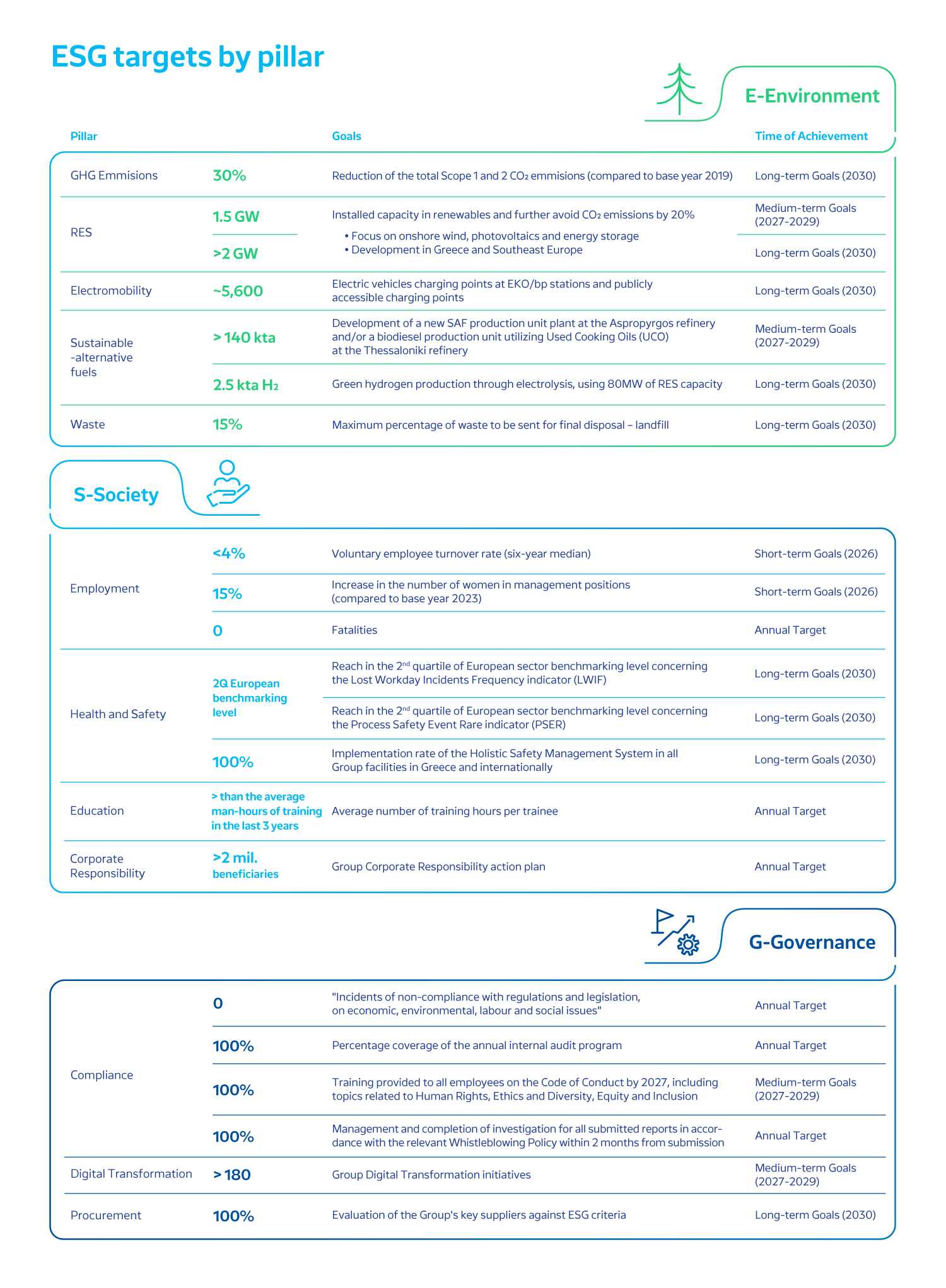
HELLENiQ ENERGY actively participates in the energy transition by fostering innovation and developing low-carbon solutions, thereby promoting sustainability. The table presents the Group’s ESG Goals per pillar.
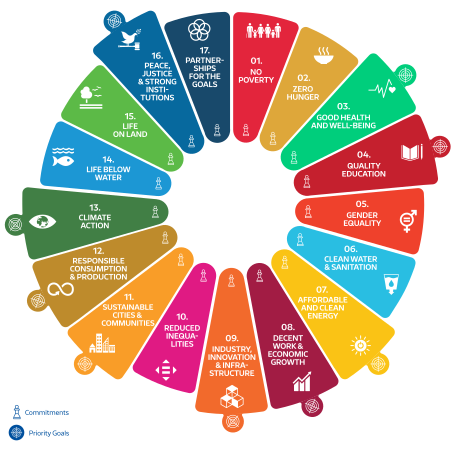
Furthermore, the Group has incorporated the United Nations Sustainable Development Goals (SDGs) into its strategy and actively pursues their advancement through targeted policies, initiatives and social programs.
Based on the results of the Double Materiality Assessment (DMA), as well as the Group’s ESG goals and initiatives, HELLENiQ ENERGY has aligned its strategy with the SDGs, contributing to the majority of them, as outlined below:

ESG Reported Standards, Frameworks and Ratings
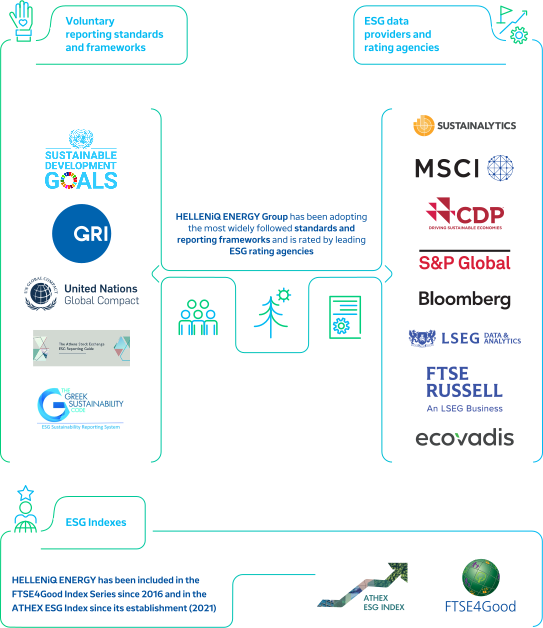
ESG Rating Agency | ESG Score | High (Rating Scale) | Low (Rating Scale) | Latest Report Date | Comments |
CDP | B | A | D- | 2024 | Climate - Management band |
S&P Global | 60* | 100 | 0 | 2025 | Percentile 85* / Oil & Gas Refining & Marketing |
Sustainalytics | 30.2** | 0 | 100 | 2025 | ESG Risk Management: Strong (2025) |
MSCI | BBB*** | AAA | CCC | 2025 | ESG Controversies: no controversies / Lowest Flag |
Ecovadis | "Bronze Recognition Level" 66 | 100 | 0 | 2025 | Top 35% Sustainability rating / Percentile 75 |
Bloomberg | 5.22 | 10 | 0 | 2025 | "Leading position" vs peers |
LSEG DATA & ANALYTICS | B 64 | A+ | D- | 2025 | 'B' score indicates good relative ESG performance and above-average degree of transparency in reporting material ESG data publicly / A+ ESG Controversies Score**** |
Transparency Score
ATHEX ESG Data Portal | 99% Transparency | 100 | 0 | 2025 | Powered by ATHEX ESG Data Portal |
*As of October 31, 2025
** ESG risk rating
***Produced by MSCI ESG Research as of February 20, 2025 (see disclaimer)
****Source Eikon
Disclaimer Statement:
THE USE BY HELLENiQ ENERGY Holdings S.A. OF ANY MSCI ESG RESEARCH LLC OR ITS AFFILIATES (“MSCI”) DATA, AND THE USE OF MSCI LOGOS, TRADEMARKS, SERVICE MARKS OR INDEX NAMES HEREIN, DO NOT CONSTITUTE A SPONSORSHIP, ENDORSEMENT, RECOMMENDATION, OR PROMOTION OF HELLENiQ ENERGY Holdings S.A. BY MSCI. MSCI SERVICES AND DATA ARE THE PROPERTY OF MSCI OR ITS INFORMATION PROVIDERS, AND ARE PROVIDED ‘AS-IS’ AND WITHOUT WARRANTY. MSCI NAMES AND LOGOS ARE TRADEMARKS OR SERVICE MARKS OF MSCI.
Stakeholders and Double Materiality Assessment
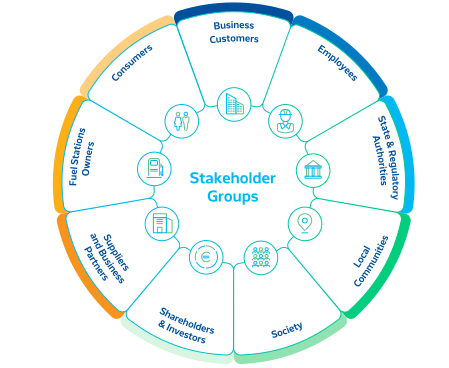
Stakeholders are defined as entities or individuals who may be significantly impacted by the Group’s activities or who may influence the Group’s ability to implement its business strategy and achieve its objectives. Engagement with stakeholders constitutes an integral component of the Group’s due diligence process, as well as of the assessment of material sustainability impacts, risks and opportunities.
Stakeholder engagement is conducted throughout the year through various channels, enabling bilateral communication that informs the Group’s decision-making processes. The identified stakeholder groups of HELLENiQ ENERGY are presented below.
In the context of stakeholder consultation and the analysis of the impacts of the Group’s activities, a Double Materiality Assessment (DMA) of sustainability impacts, risks and opportunities (IRO) was conducted based on predefined parameters, in accordance with the principles of the European Sustainability Reporting Standards (ESRS).
These parameters included, among others, stakeholder feedback, sustainability-related IROs, the volume and geographical distribution of sales, the number of employees, as well as dependencies on ecosystems, energy, fuel, marine resources and people. As part of the DMA, key stakeholder groups were involved through targeted discussions on sustainability-related matters.
With regard to impact materiality, an initial long list of 207 impacts was assessed and consolidated into a short list of 75 impacts, of which 20 were identified as material for the current reporting period across three time horizons (2026, 2027–2030 and 2031–2036), as well as along the value chain. The assessment was conducted using the following criteria: scale, scope, likelihood (for potential impacts only) and irremediability (for negative impacts only).
Regarding financial materiality, an initial long list of 425 risks and opportunities was assessed and consolidated into a short list of 77 items, which were evaluated based on the magnitude of their potential positive or negative financial impact and their likelihood of occurrence across the short-, medium- and long-term horizons. Through this evaluation process, 12 material risks and opportunities were identified as having, or being expected to have, significant financial implications for the Group, either during the current reporting period (2025) or across three time horizons (2026, 2027–2030 and 2031–2036).
Environment
Climate Change
The HELLENiQ ENERGY Group is responding to developments in the energy sector by implementing a strategic plan focused on modernizing its core activities, while also developing a new pillar in Power and Gas, with particular emphasis on Renewable Energy Sources. Through its VISION 2030+ strategic plan, HELLENiQ ENERGY is adapting to the rapidly evolving energy landscape, prioritizing targeted growth and strengthening the resilience of its hydrocarbons portfolio. At the same time, it maintains strategic flexibility in sustainable fuels and the Power business, advancing its transformation into an autonomous and vertically integrated platform.
The targets set are directly linked to the United Nations Sustainable Development Goals (UN SDGs) and focus on reducing the carbon footprint and achieving climate neutrality by 2050, in line with national strategy and legislation.
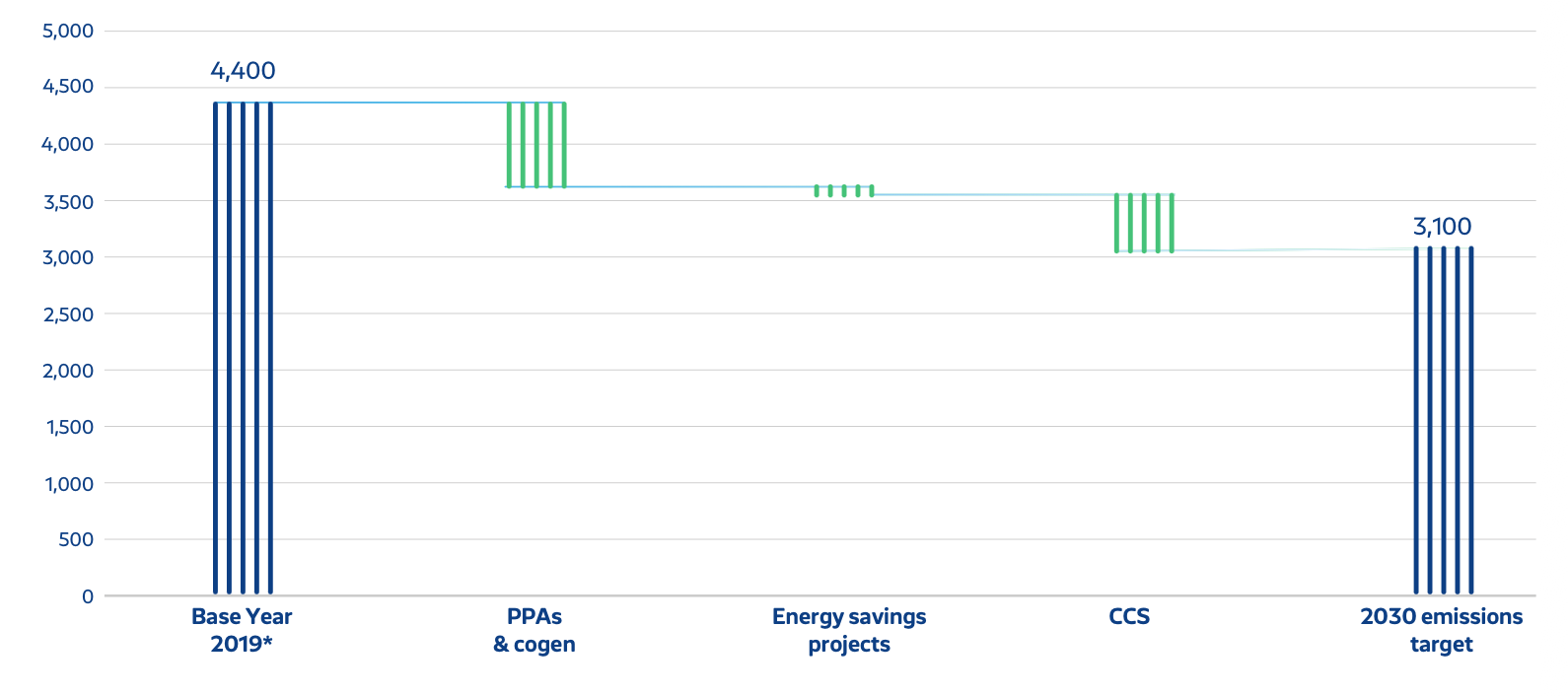
Specifically, by 2030, the Group has set the following targets compared to the 2019 baseline year:
- A 30% reduction in Scope 1 and Scope 2 (market-based) emissions, to be achieved through energy-use optimization and the application of innovative greenhouse gas (GHG) emissions-reduction technologies in refining activities.
- 2 GW of installed renewable energy capacity (with an interim target of 1.5 GW of operational capacity by 2028), aiming at an additional CO2 emissions reduction of more than 20%.
The Group designated 2019 as the baseline year for GHG emissions, as it represents a year that accurately reflects the Group’s operations and emissions profile prior to the implementation of significant decarbonization initiatives. As such, 2019 provides a consistent and robust benchmark for monitoring progress over time.
The Group’s strategic approach places particular emphasis on the provision of sustainable energy for all and the achievement of climate neutrality. HELLENiQ ENERGY conducts regular assessments of its transition plan to ensure alignment with the national climate law, the National Energy and Climate Plan and the national long-term strategy, thereby confirming the continued compatibility of its objectives with overarching policy targets.
Through continuous monitoring of developments, HELLENiQ ENERGY contributes significantly to the promotion and facilitation of sustainable mobility, supporting initiatives aimed at transforming the technological framework and fuel mix of transport, and thereby accelerating the transition to a low-carbon economy.
The Group has prioritized its energy transformation, with the objective of reducing its carbon footprint. In relation to its own operations, planned investments include energy savings and efficiency measures, the production of low-carbon fuels such as blue and green hydrogen, biofuel production facilities, and the development of carbon capture technologies.
The development of a substantial renewable energy sources (RES) portfolio remains a strategic priority, supporting diversification of the Group’s energy mix and contributing to GHG emissions reduction. Intermediate targets include 1.5 GW of installed RES capacity by 2028 and more than 2 GW by 2030. Investments encompass photovoltaic and wind projects, as well as energy storage solutions, including Battery Energy Storage Systems (BESS) and pumped hydro storage. In parallel, a significant expansion of the e-mobility network is planned across the fuel retail network and third-party points of interest. By the end of 2025, 0.5 GW of RES projects were in operation, with an additional 6 GW under development.
The VISION 2025 strategic plan was successfully implemented, confirming the Group’s strategy for a balanced energy transition. During this period, HELLENiQ ENERGY strengthened and decarbonized its refining activities, expanded its international downstream presence, and established a second growth pillar through a fully integrated Power platform (RES, Electricity and Natural Gas), while further evolving its governance model.
At the same time, carbon-related costs have continued to increase, driven primarily by European legislative initiatives under the “Fit for 55” package, including the EU Emissions Trading System (EU ETS) and the Carbon Border Adjustment Mechanism (CBAM). This trend is particularly relevant given the potential future inclusion of refineries within the CBAM framework. In 2025, the financial impact on HELLENiQ ENERGY was closely linked to the rising costs associated with covering the emission allowance deficit, as all three of the Group’s refineries in Greece participate in the EU ETS.
During the period 2021–2025 (the first sub-period of the fourth trading phase) and under the revised free allocation rules, compliance costs increased significantly due to the sharp rise in allowance prices (€87.5 per ton of CO2 at the end of 2025, compared to approximately €32 per ton at the end of the previous phase), combined with the reduced allocation of free allowances under the current regime.
A further increase in compliance costs and an elevated risk of carbon leakage are expected, given the proposed amendments to the EU ETS framework as part of the European Green Deal and the emissions-reduction targets under the “Fit for 55” package. For 2025, Scope 1 CO2 emissions from the Group’s three refineries and electricity generation units amounted to 4.2 million tons, representing approximately 99% of the Group’s total Scope 1 emissions (direct emissions).
Scope 1 & 2 emissions reduction by ~30% Scope emissions 1 & 2 – ktCO2
Emissions reduction
| Category | Value |
| Base Year 2019* | 4400 |
| PPAs & cogen | -797 |
| Energy savings projects | -66 |
| CCS | -505 |
| 2030 emissions target | 3100 |
* Comparable (adjusted) emission levels under the current mode of operation and the latest EU ETS monitoring rules
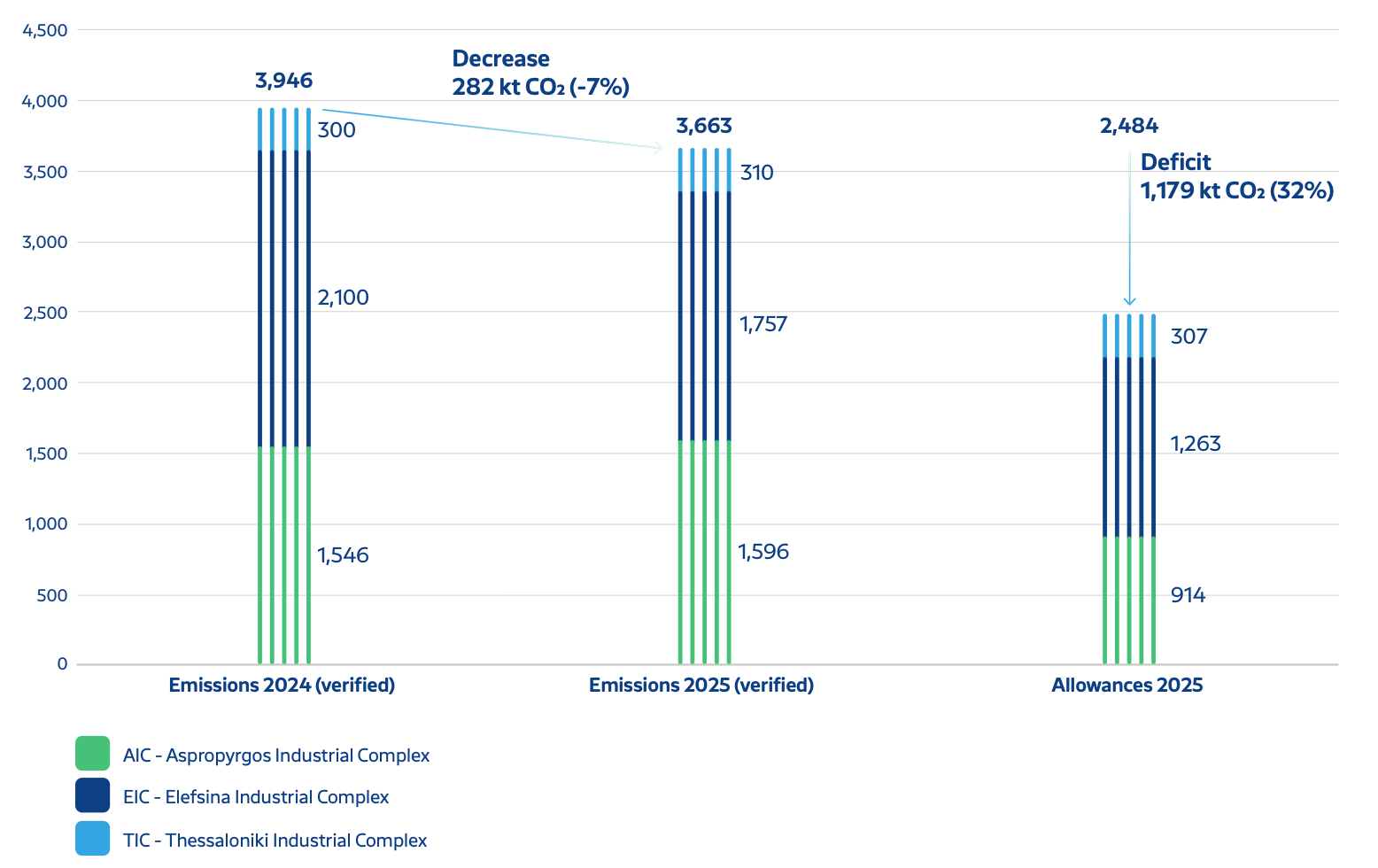
EU ETS – Verified CO2 emissions for the Group’s refineries (in kt CO2)
EU ETS
| Category | Emissions 2024 (verified) | Emissions 2025 (verified) | Allowances 2025 |
| AIC | 1546 | 1596 | 914 |
| EIC | 2100 | 1757 | 1263 |
| TIC | 300 | 310 | 307 |
Indirect Scope 2 market-based emissions for 2025 amounted to 199,449 tCO2e, while Scope 2 location-based emissions for the same year totaled 293,133 tCO2e. Other indirect Scope 3 emissions were calculated at 53,876,681 tCO2e (with the respective categories presented in detail in the Sustainability Statement of the Group’s 2025 Annual Financial Report). The Group’s total carbon footprint amounted to 58,304,795 tCO2e (market-based) and 58,398,479 tCO2e (location-based).
The refining sector is among the industries most susceptible to carbon leakage, which may lead to a material deterioration of competitiveness compared to similar facilities outside Europe. Due to its geographical position at the external borders of the European Union, the Group faces heightened competitive pressure relative to other EU countries. This is driven by neighboring non-EU jurisdictions that produce similar products without bearing carbon-related costs, costs which the Group is required to internalize through its participation in the EU Emissions Trading System (EU ETS).
In 2025, HELLENiQ ENERGY conducted a climate scenario analysis covering all Group activities. By modelling different climate scenarios, the Group assessed physical and transition risks across short-, medium- and long-term time horizons, as follows:
- Short-term time horizon: 2026
- Medium-term time horizon: 2027 – 2030
- Long-term time horizon: 2031 – 2050
Specifically, the analysis focused on two alternative climate scenarios:
- the Net Zero Transition Scenario,
limiting the increase in global average temperature to well below 2°C and, where possible, close to 1.5°C above pre-industrial levels; and - the High Emissions Scenario,
which assumes higher future warming and, consequently, an increased frequency and intensity of extreme weather events, as well as worsening chronic climate trends.
The physical risks identified as high risk across all time horizons include heatwaves, wildfires and water stress. The key transition risk identified as high risk in both the medium- and long-term horizon relates to emerging regulatory developments, particularly carbon pricing mechanisms.
At the same time, HELLENiQ ENERGY has identified a range of opportunities arising from emerging low-carbon technologies developed to address climate change, including blue and green hydrogen production, CO2 capture and storage technologies, and other solutions supporting the replacement of fossil fuels with lower-carbon alternatives. Within the context of its strategy, these technologies are systematically evaluated for their potential applicability and effectiveness in mitigating risks and maximizing long-term benefits.
Air Emissions
Air emissions arising from the operation of all industrial facilities within the Group’s operations are rigorously monitored in accordance with the specific requirements of the environmental permit issued for each facility. This monitoring ensures strict compliance with statutory emission limits and contributes substantially to the improvement of air quality. Moreover, a significant proportion of the Group’s industrial facilities are equipped with continuous emission monitoring systems (CEMS). Data generated by these systems are systematically analyzed, and the results are subsequently submitted to the competent environmental authorities for monitoring and control purposes.
The Group’s strategy is underpinned by environmental investments aimed at improving air quality. Indicatively, with regard to particulate matter emissions and in pursuit of further reductions, an electrostatic precipitator (ESP) filter was installed at the catalytic cracking unit stack of the Aspropyrgos refinery. This emissions-abatement system became fully operational in 2022 and, by the end of 2025, had contributed to a 43% reduction in particulate matter (PM10) emissions at the specific refinery.
In addition, continuous improvement is achieved through measures such as maximizing the use of fuel gases, utilizing fuels with higher environmental specifications, investing in advanced production technologies (e.g. low-NOx burners), and directly reducing emissions through volatile organic compounds (VOC) recovery systems during the loading of petroleum products.
At present, the Group has not introduced additional initiatives, as no specific pollution-reduction objective has been set beyond existing commitments. The environmental performance achieved to date is considered particularly favorable, as reflected in the substantial reduction of key air-quality-related indicators in recent years. This positive performance is further supported by the corresponding decline observed in quantitative ambient air-quality monitoring data in surrounding areas.
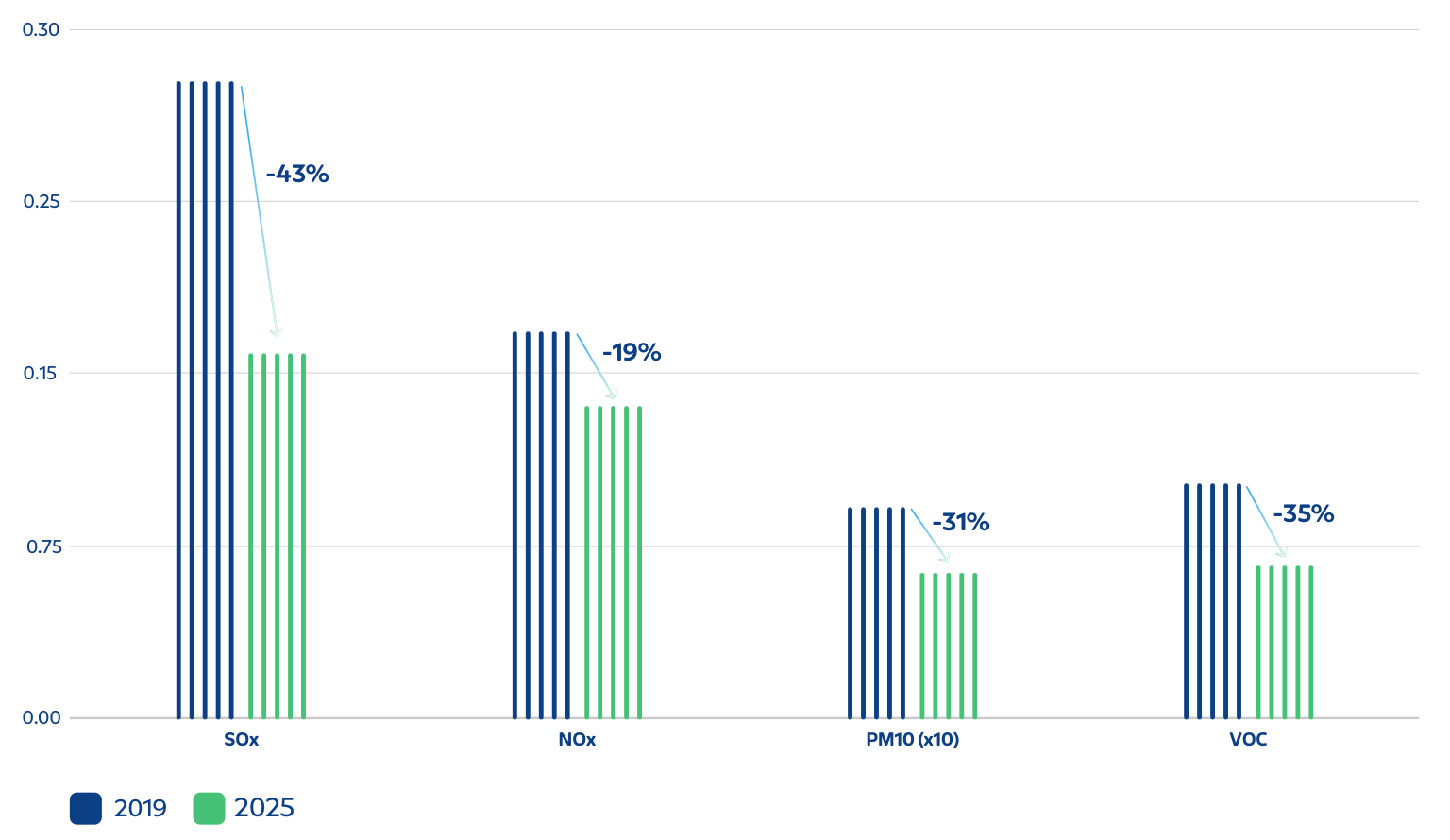
Air Emissions* (tons/throughput)
Air Emissions
| Pollutant | 2019 | 2025 |
| SOx | 0,278 | 0,15994 |
| NOx | 0,169 | 0,13774 |
| PM10 (x10) | 0,094 | 0,06439 |
| VOC | 0,103 | 0,06758 |
*The PM index is multiplied by 10 for better presentation purposes
In 2025, the downward trend in SOx, NOx, VOC and PM emissions indices observed over the past six years continued, reaching reductions of up to 43% (for SOx emissions).
Circular Economy
HELLENiQ ENERGY is committed to the protection of the environment and the sustainable and efficient use of natural resources. To this end, the Group undertakes all necessary measures and actions to prevent and mitigate potential environmental impacts, while promoting initiatives that support the preservation of natural capital. The efficient use of materials and natural resources throughout their life cycle represents a significant business opportunity and reflects the Group’s commitment to environmental protection.
Modern wastewater treatment facilities, including the Group’s three-stage integrated wastewater treatment plants at its refineries, ensure the protection of water bodies through the continuous improvement of wastewater management performance. In this context, the upgrade of the Wastewater Treatment Plant at the Aspropyrgos refinery progressed according to plan and was completed in 2025. These advanced treatment facilities ensure that water used in operations is effectively treated and, where possible, reused, thereby minimizing environmental impacts and promoting resource conservation. Through the integration of such systems, the Group demonstrates its commitment to sustainable practices across its value chain.
In 2025, recycled and reused water at production facilities accounted for 13% of total water use. Total water discharges amounted to 10,346,570 m³, of which over 96% was discharged into the sea following appropriate treatment.
In addition to wastewater management, the Group invests in the sustainable management of waste, aiming to maximize recycling across different waste streams and, where recycling is not feasible, applying best practices in on-site waste management. This approach prioritizes the protection of the environment and human health.
The strategic approach focuses not only on reducing the amount of waste sent to landfill through investments in modern waste treatment facilities but also on creating synergies for waste utilization for energy recovery and exploring alternative technologies for its use as raw materials, with the aim of substituting raw mineral resources.
The ongoing reduction of waste necessitating final disposal contributes substantially not only to the mitigation of adverse effects on the environment and public health, but also to the reduction of operational costs associated with the Group’s activities.
Petroleum by-products generated during refining processes are classified as waste at certain stages of their life cycle (whether self-produced or originating from third parties) and represent a significant opportunity for reuse as raw materials in the Group’s production facilities or as fuels, in accordance with the principles of the circular economy.
The Group aims to maintain the share of waste sent to disposal (landfill or incineration) at 15% or less by 2030. This target is voluntary and not mandated by legislation, underscoring the Group’s proactive commitment to sustainable waste management and environmental stewardship.
In 2025, the total amount of waste generated rose by 42% compared to the previous year due to increased operational activity. Nevertheless, this substantial increase was concurrently offset by a high recovery rate, which is indicative of the implementation of advanced recycling and recovery practices at the Group’s facilities. More than 35,000 tons of waste—representing over 92% of the total—were reused, recycled or further recovered through raw-material recovery processes.
It is noted that the quantities of solid waste generated per facility are primarily driven by tank cleaning activities and may vary annually depending on maintenance planning and the availability of treatment units, while ensuring effective waste management.
Solid waste by disposal method
Solid waste
| Method | Percentage |
| Recycle | 53 |
| Recovery | 40 |
| Landfill | 7 |
| Incineration | 0,3 |
| Reuse | 0,2 |
It is noted that the quantities of solid waste generated per facility are primarily driven by tank cleaning activities and may vary annually depending on maintenance planning and the availability of treatment units, while ensuring effective waste management.
EU Taxonomy
During 2025, the European Commission launched initiatives to simplify sustainability reporting obligations under the Corporate Sustainability Reporting Directive (CSRD), including disclosures required under the EU Taxonomy Regulation.
EU Taxonomy Overview
The EU Taxonomy (EUT) serves as a standardized classification framework designed to define the environmental performance of economic activities across a wide range of industries, facilitating the transition toward a low-carbon, resilient, and resource-efficient economy by providing clear criteria for assessing sustainability. Furthermore, the EUT supports investors, corporate entities, and financial institutions in identifying and promoting activities that contribute to environmental objectives.
In 2025, the European Commission adopted a set of measures to simplify the application of EUT (“Omnibus I” package)11. These changes have been formalized through the adoption of a Delegated Act, which amends the existing Taxonomy Disclosures, as well as the Climate and Environmental Delegated Acts. The simplification measures laid out in the Delegated Act apply from 1 January 2026, covering 2025 data, with optional deferral to 2026. Under the revised rules, non-financial undertakings are not required to assess Taxonomy eligibility or alignment for non-material activities.
Irrespective of the simplification measures, the Taxonomy Regulation includes a hierarchy of two levels of reporting, Taxonomy-eligibility and Taxonomy-alignment, with the latter as subset of the former.
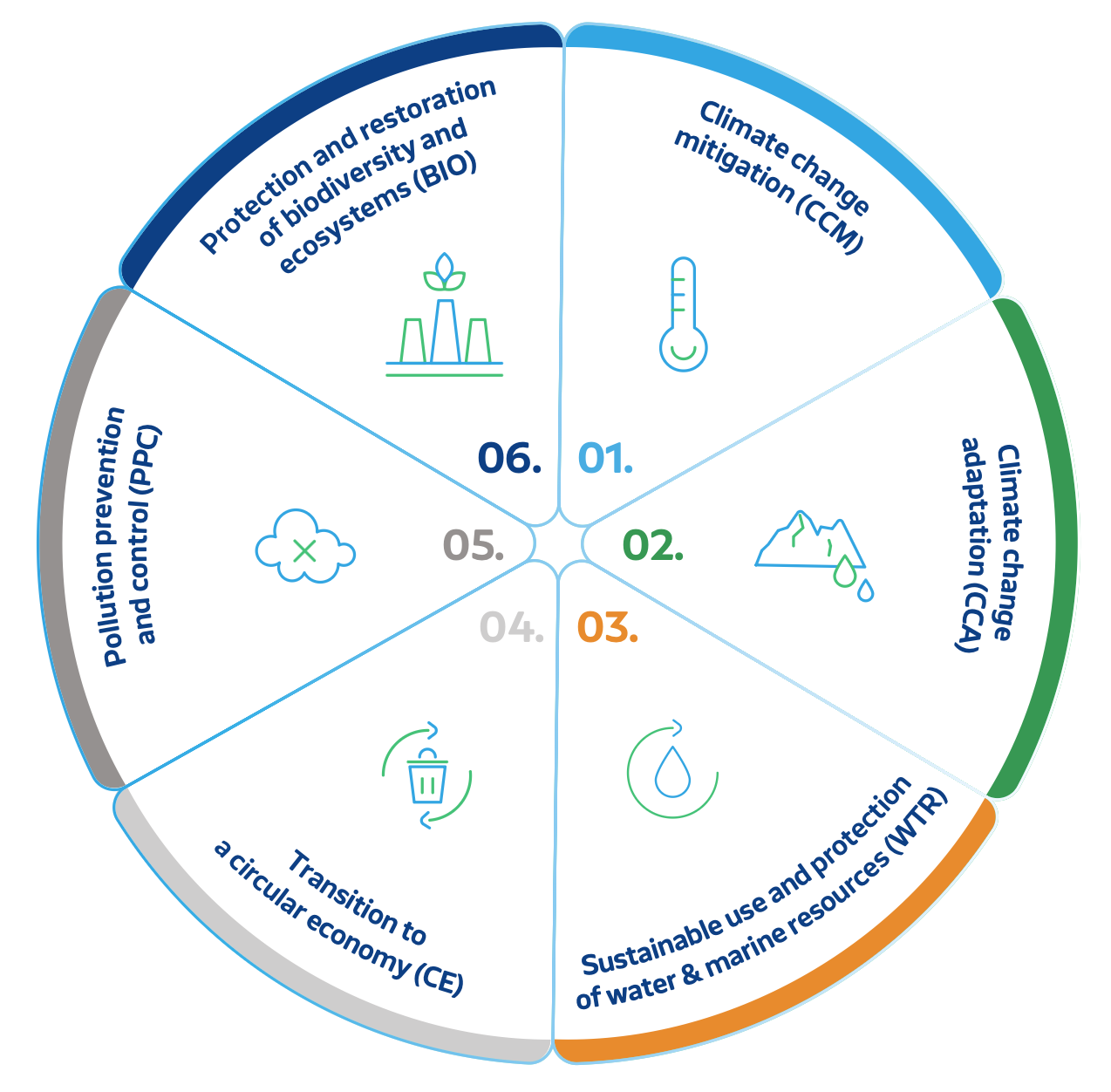
An economic activity is considered Taxonomy-eligible if it is listed in the EU taxonomy and can potentially contribute to realizing at least one of the following six environmental objectives:
- Climate change mitigation (CCM)
- Climate change adaptation (CCA)
- Sustainable use and protection of water and marine resources (WTR)
- Transition to a circular economy (CE)
- Pollution prevention and control (PPC)
- Protection and restoration of biodiversity and ecosystems (BIO)
Environmental objectives for Taxonomy Eligibility
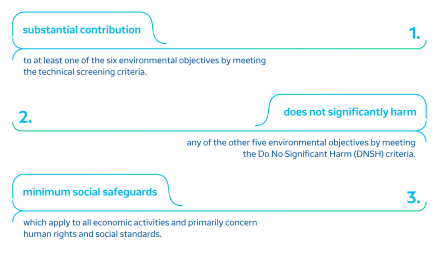
An economic activity is defined as environmentally sustainable i.e.
Taxonomy-aligned if it meets all three of the following conditions:
EU Taxonomy Reporting* by HELLENiQ ENERGY Group
HELLENiQ ENERGY is required to publish annual EU Taxonomy disclosures. This report covers FY2025 and presents the proportion of the Group’s activities that are Taxonomy-eligible and Taxonomy-aligned across all environmental objectives.
The Group has adopted the Commission’s recommended simplification approach while also including activities deemed material to its business. Eligibility screening followed the same methodology as FY2024. A materiality assessment was applied, and alignment screening was performed only for material activities.
The reported KPIs cover consolidated entities included in the HELLENiQ ENERGY’s financial statements. Joint ventures and associates without management control are excluded, though future inclusion is under evaluation. The FY2025 assessment includes Enerwave as a fully owned subsidiary.
*The HELLENiQ ENERGY Group’s EU Taxonomy Report is presented in detail in the 2025 Annual Financial Report.
Process Analysis of the Group's Business Activities
The six-step assessment methodology process is presented below:
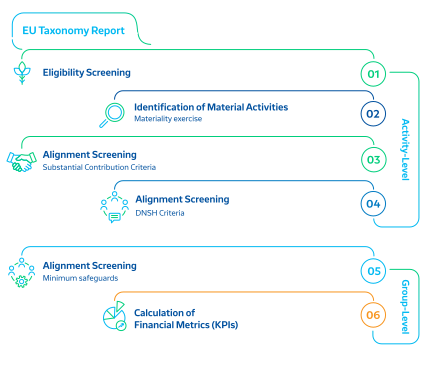
01. Eligibility Screening
The assessment of the eligibility of the Group’s business activities was carried out based on the EU Taxonomy Regulation, while with regard to the identification of eligible activities related to all six environmental objectives, the nature of the Group’s business activities and the relevant NACE codes (Nomenclature statistique des Áctivités économiques dans la Communauté Éuropéenne) were thoroughly analyzed and assessed.
Eligible Activities
The 15 EU Taxonomy-defined economic activities include:
EU Taxonomy-defined Economic Activity | Description of the Group's Activity | Environmental Objective |
Petrochemicals | ||
1) CCM 3.14 - Manufacture of organic basic chemicals | Production of propylene | Climate Change Mitigation (CCM) |
2) CCM 3.17 - Manufacture of plastics in primary form | Production of polypropylene | Climate Change Mitigation (CCM) |
3) CE 1.1 - Manufacture of plastic packaging goods | Production of Biaxially Oriented Polypropylene (BOPP) films | Circular Economy (CE) |
Energy | ||
4) CCM 4.1 - Electricity generation using solar photovoltaic technology | Construction and operation of large-scale electricity production facilities from solar energy using PV systems | Climate Change Mitigation (CCM) |
5) CCM 4.3 - Electricity generation from wind power | Construction and operation of large-scale electricity production facilities from wind energy | Climate Change Mitigation (CCM) |
6) CCM 4.9 - Transmission and distribution of electricity | Construction of a high-voltage 150 kV electricity transmission line connecting the Group's PV projects to potential consumers | Climate Change Mitigation (CCM) |
7) CCM 4.10 - Storage of electricity | Construction of battery energy storage systems and pumped hydropower storage facilities to store electricity | Climate Change Mitigation (CCM) |
8) CCM 4.29 - Electricity generation from fossil gaseous fuels | Production of electricity from natural gas-fired units | Climate Change Mitigation (CCM) |
Refining, Supply & Trading | Refining, Supply & Trading | |
9) CCM 6.10 - Sea and coastal freight water transport, vessels for port operations and auxiliary activities | Marine and ship transport services of bulk liquids or gases by tankers | Climate Change Mitigation (CCM) |
Electromobility Services | ||
10) CCM 6.15 - Infrastructure enabling low-carbon road transport and public transport | Construction and operation of EV charging stations | Climate Change Mitigation (CCM) |
Other Activities | Other Activities | |
11) CCM 7.6 - Installation, maintenance and repair of renewable energy technologies | Small-scale PV systems installed on-site as technical buildings systems in several Group's facilities e.g., rooftop PV systems | Climate Change Mitigation (CCM) |
12) CCM 7.7 - Acquisition and ownership of buildings | Ownership of buildings or properties | Climate Change Mitigation (CCM) |
13) CCM 8.1 - Data processing, hosting and related activities | Operation of data centres | Climate Change Mitigation (CCM) |
14) CCM 8.2 - Data-driven solutions for GHG emissions reductions | The use of energy modelling, optimization, and real-time data analytics solutions that enables GHG emissions reductions by evaluating energy performance, providing actionable insights, and consolidating data from various systems | Climate Change Mitigation (CCM) |
15) CE 4.1 - Provision of IT/OT data-driven solutions | Deployment of advanced asset performance management solutions that enable real-time monitoring, data collection, and analysis of asset health and performance. These tools leverage AI-driven analytics to identify inefficiencies, predict potential failures, and provide early warnings to optimize maintenance activities and improve operational efficiency | Circular Economy (CE) |
Non-Eligible Activities
Activities not listed in the Climate or Environmental Delegated Acts were classified as non-eligible. These include Refining, Supply & Trading, Petrochemicals, Fuels Marketing, Exploration & Production, and other supporting activities (non-revenue generating activities). For greater details on the Group business activities, please to the section “Business Activities” of “Business Review” chapter.
02. Identification of Material Activities
The Group, following the same methodology as in the previous reporting period, conducted an eligibility assessment and materiality assessment of its activities in accordance with the updated requirements of the EU Taxonomy, as introduced by the “Omnibus I” legislative package. The analysis was based on actual interim financial data and annual estimates and covered the three EU Taxonomy Key Performance Indicators (revenue, capital expenditure and operating expenditure). Within the alignment assessment process, activities considered material were primarily those related to the generation and storage of electricity from renewable sources, the generation of electricity from fossil gaseous fuels, as well as selected digital and supporting activities.
According to the EU Taxonomy methodology, activities that cumulatively represent less than 10% of the Group’s total revenue, capital expenditure or operating expenditure are considered non-material and do not proceed to the alignment assessment stage. These activities, which did not exceed the relevant threshold during the 2025 reporting period, span a wide range of sectors, including petrochemicals, energy and transport infrastructure, digital solutions, electromobility infrastructure and real estate. Although they were not further assessed at the alignment stage, the Group provides relevant summary information, recognising the added value of the EU Taxonomy in enhancing transparency, informing stakeholders and maintaining flexibility in response to future regulatory developments. Further details are available in the Group’s 2025 Annual Financial Report.
03. Alignment Screening – Substantial Contribution Criteria
Subsequently, each eligible activity originating from the Group’s internal operations, as identified during the preceding phase, was subjected to a comprehensive analysis in relation to the applicable Substantial Contribution Criteria (SCC) pertaining to CCM and CE objectives, as outlined in the Climate Delegated Act, the Environmental Delegated Act and any relevant amendments.
In summary, of the 222 eligible activities (from the Group’s own operations) corresponding to 15 EU Taxonomy-defined activities, seventy-six (76) Group’s activities were found to meet the respective SCC for CCM objective (corresponding to three (3) EU Taxonomy-defined activities).
04. Alignment Screening – Do No Significant Harm (DNSH) Criteria
For eligible activities that meet their respective SCC as identified in the previous phase, the Group applied the guidance established in Article 17 of the Taxonomy Regulation and Climate Delegated Act and Environmental Delegated Act to assess them against the relevant DNSH criteria. The analysis of the specific DNSH criteria against the relevant activities assessment is available in the 2025 Annual Financial Report.
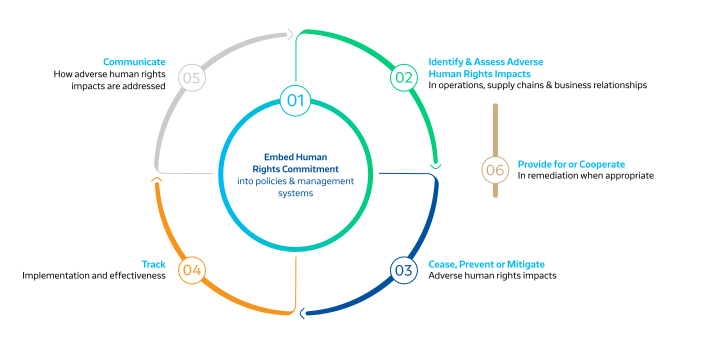
05. Alignment Screening – Minimum Social Safeguards
To ensure compliance with Article 18(1) of the Taxonomy Regulation, the Platform for Sustainable Finance, through its report on minimum safeguards, suggests a two-pronged approach consisting of two criteria.
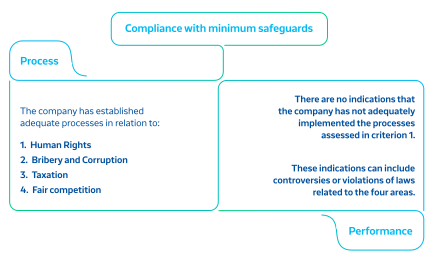
The main analyses used to assess compliance with the minimum safeguards are described below.
06. Calculation of Financial Key Performance Indicators (KPIs)
The Disclosures Delegated Act, as outlined in Annex I (KPIs of non-financial undertakings), specifies three KPIs to be disclosed concerning the proportion of the Group’s Taxonomy-eligible and Taxonomy-aligned activities. Specifically, these KPIs include Turnover, Capital Expenditure (CapEx) and Operating Expenses (OpEx). The methodology for calculating the aforementioned Key Performance Indicators (KPIs) can be accessed in the 2025 Annual Financial Report.

Overall Results of EU Taxonomy-Compliance Assessment
Following the completion of eligibility and alignment screening for all the Group’s activities, as extensively discussed in the “Process for Analyzing the Group’s Business Activities” section in the 2025 Annual Financial Report, a summary of the results is presented herein.

Overall Results of KPIs
Detailed tables delineating the proportion of products or services associated with Taxonomy-aligned economic activities across the three KPIs are available in the 2025 Annual Financial Report.
Turnover
| Category | Value |
| Eligible-aligned | 72,23 |
| Eligible-not aligned | 0,01 |
| Non eligible | 11073,01 |
CapEx
| Category | Value |
| Eligible-aligned | 148,39 |
| Eligible-not aligned | 10,41 |
| Non eligible | 387,14 |
OpEx
| Category | Value |
| Eligible-aligned | 19,11 |
| Eligible-not aligned | 39,97 |
| Non eligible | 109,21 |

Own Workforce
HELLENiQ ENERGY’s strategy and business model unequivocally demonstrate its steadfast commitment to safeguarding its employees by proactively addressing both actual and potential impacts. This commitment to maintaining a safe and healthy work environment is substantiated by the achievement of zero significant industrial accidents, the implementation of a robust Health and Safety Management System and the provision of employee benefits such as insurance, financial aid and training programs.
HELLENiQ ENERGY has established specific procedures governing its partnerships, ensuring that these third-party entities adhere to labor legislation (national, European, ILO) regarding human rights and working conditions. Through its Sustainability Policy, HELLENiQ ENERGY and its subsidiaries are committed to promoting human rights, respecting diversity and equality, and eliminating all forms of discrimination, throughout the value chain, encompassing local communities, consumers, and partners. The cooperation framework includes the Code of Conduct, the Procurement Regulations, the Sustainability Policy and procedures for promoting health and safety, commitment to environmental standards, responsible labor practices, and respect for human rights, as well as the evaluation process.
All executives, members of the management, employees, contractors and individuals providing services to HELLENiQ ENERGY and its Group companies are obligated to comply with the Sustainability Policy and uphold Health, Safety, Environment and Sustainability requirements. The health and safety of personnel constitute fundamental values, represent primary concerns, and serve as prerequisites for the proper execution of the Group’s operations.
The Sustainability Policy and the Occupational Health and Safety Management Systems adhere to all relevant Greek and European legislative requirements, in addition to conforming with internationally recognized codes and practices associated with these matters, and, in many instances, are even more stringent.
To address potential adverse impacts on human rights, the Group has established a grievance and complaints management mechanism, providing affected communities with an appropriate channel to express their concerns. These processes strengthen transparency and accountability, while simultaneously fostering the ongoing improvement of the Group’s overall contribution in this matter (Whistleblowing Policy – Whistleblowing electronic Platform).
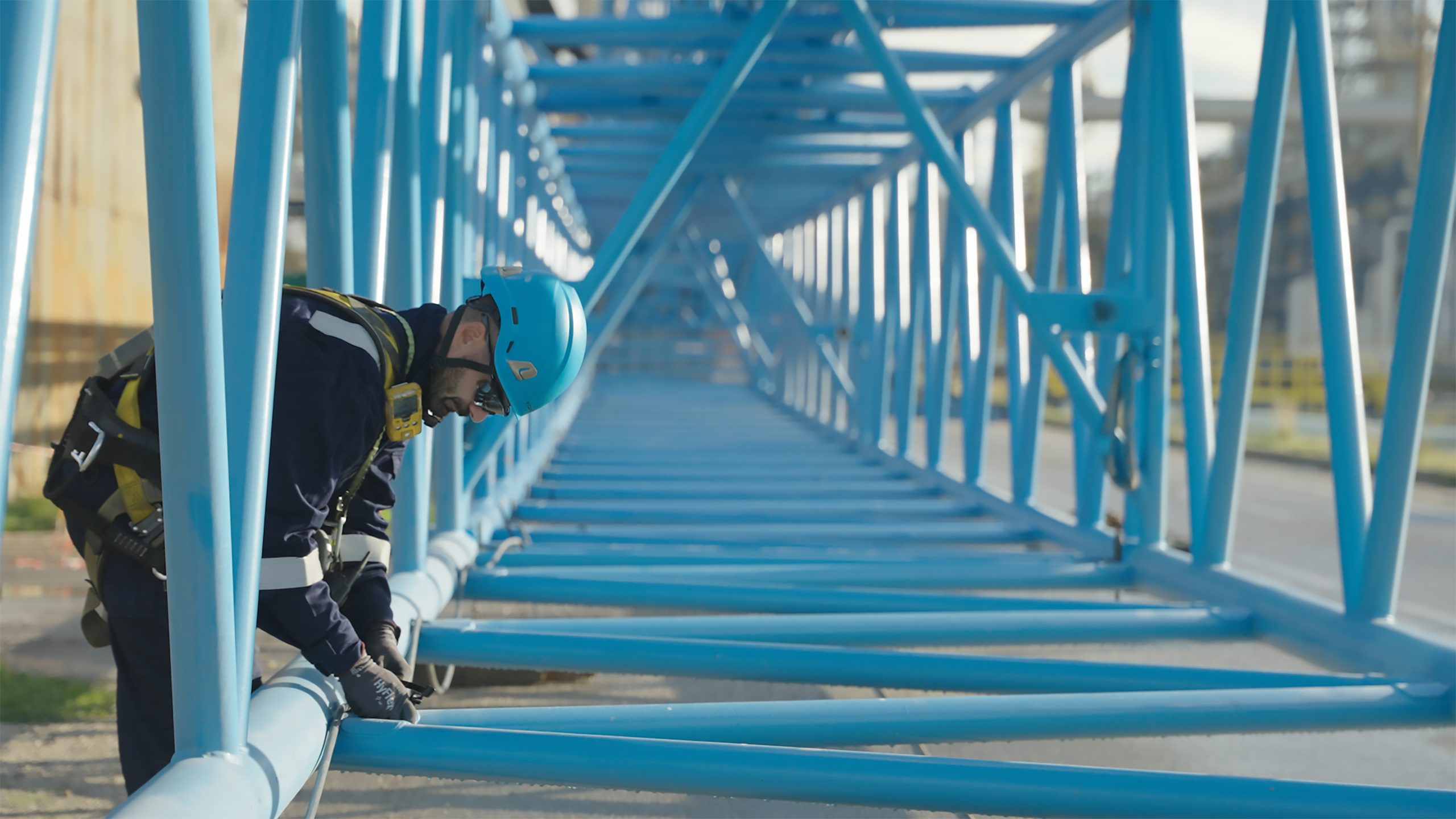
The HELLENiQ ENERGY Group considers its human resources to be the foundation for growth and improvement of overall performance in all areas of its activities. The Group focuses both on maintaining existing jobs and creating new ones, thereby enhancing professional stability. Based on the values of meritocracy, excellence, integrity, consistency, innovation, and continuous learning, the Group has created a modern and supportive working environment. Through a comprehensive human resources development and management system, opportunities for professional advancement, competitive compensation and benefits, systematic performance evaluation, and training are provided. At the same time, employees are encouraged to take on a variety of roles and maintain a balance between professional and personal time.
2025 Employee head count by gender
Gender | Number of employees (head count) |
Male | 3,258 |
Female | 934 |
Total Employees | 4,192 |
The Group fully respects employees’ rights to freedom of association, allowing unrestricted participation in trade unions and professional associations. Overall, 74% of employees are covered by collective bargaining agreements. There are seven (7) representative employee unions in the Group companies, which co-sign respective Company Collective Bargaining Agreements with the companies. Moreover, all employees, irrespective of gender, are entitled to benefit from family-related leave.
The performance of the Group’s employees undergoes an annual evaluation. Every employee participates in a yearly procedure designed to assess their performance, through which a plan is formulated to enhance their knowledge and develop their skills.
For senior and top managers, the assessment is conducted annually based on KPIs, aligning the company’s performance with the managers’ targets, covering areas such as sustainable development, safety, environment and other related matters.
In addition, the Group provides equal training opportunities to all employees, based on their role and specialization. However, as a higher number of men are employed at the industrial facilities and these positions require more training due to the nature of the work and related requirements, the average training hours for male employees are higher.
HELLENiQ ENERGY is committed to maintaining an impartial and transparent remuneration system through its operations. The ratio of the annual total compensation for the organization’s highest-paid individual to the median annual total compensation for all employees (excluding the highest-paid individual) within the Group is 30.68, indicative of an approach to compensation that is harmonized with performance, responsibilities, and prevailing market standards. This ratio underscores the Group’s dedication to fostering a fair and competitive work environment, in strict accordance with its fundamental principles of equality and compliance with Greek, national and EU regulations.
2025 Performance and career development reviews and average training hours per employee
Gender | % of employees who participated in regular performance and career development reviews |
Male | 99 |
Female | 98 |
Gender | Average number of training hours per employee |
Male | 37.4 |
Female | 20.4 |
Health & Safety
For the HELLENiQ ENERGY Group, health and safety constitute paramount priorities across all its activities. The Group adopts a comprehensive approach to the management of health and safety matters, encompassing planned initiatives and preventive measures aimed at eliminating risks and enhancing performance. This approach also includes the implementation of management systems, inspections and actions to strengthen leadership across all Group activities. Furthermore, the Group ensures the implementation of all necessary safety measures for its employees, external partners and visitors in all work areas, in alignment with the United Nations Sustainable Development Goal on Good Health and Well-Being (SDG 3).
The Group consistently invests in preventive measures, infrastructure and continuous improvements, regularly reviewing procedures and aligning them with current standards and best practices. Particular emphasis is placed on the training of employees and partners in the field of health and safety, with the aim of ensuring compliance with the most stringent national and European requirements. In 2025, more than €21 million were allocated to health and safety improvements across Group facilities in Greece and internationally, in addition to actions implemented through project upgrades and the modernization of equipment and units.
All Group facilities establish objectives to monitor and enhance health and safety performance, with periodic reporting conducted against predefined targets. Health and safety targets and indicators are established and monitored in accordance with the recommendations of CONCAWE.

Health and Safety (H&S) Indicators
In 2025, the Lost Workday Injury Frequency (LWIF) and All Injury Frequency (AIF) indicators—key safety performance metrics for employees and external partners—increased by 63.8% and 11.4%, respectively, compared to the previous year. This increase is mainly attributable to lower-severity incidents, given that the injury severity rate has declined significantly in recent years and continues to remain below the respective European benchmark.
At the same time, the Process Safety Event Rate (PSER), the Group’s primary process safety indicator, decreased by 27.9% compared to the previous year, with its value falling below the relevant European benchmark.
In 2025, more than 16 million working hours were recorded, during which 31 lost workday injuries were documented among employees and external contractors.
The graphs below illustrate trends in key health and safety performance indicators (KPIs)*.
LWIF12
AIF13
PSER14
LWIF
| Series | 2020 | 2021 | 2022 | 2023 | 2024 | 2025 |
| HELPE/EKO | 2,97 | 2,96 | 2,47 | 1,76 | 1,16 | 1,90 |
| CONCAWE | 0,88 | 0,93 | 1,05 | 1,10 | 0,98 |
AIF
| Series | 2020 | 2021 | 2022 | 2023 | 2024 | 2025 |
| HELPE/EKO | 4,09 | 4,01 | 3,51 | 2,71 | 2,20 | 2,45 |
| CONCAWE | 1,5 | 1,6 | 1,8 | 1,96 | 1,66 |
PSER
| Series | 2020 | 2021 | 2022 | 2023 | 2024 | 2025 |
| HELPE/EKO | 0,84 | 0,85 | 0,95 | 0,81 | 0,43 | 0,31 |
| CONCAWE | 0,4 | 0,5 | 0,44 | 0,4 | 0,38 |
*CONCAWE data for 2025, will be available in July 2026
12 Lost workday injury frequency (LWIF): (LWIs)/ 1 million manhours
13 All injury frequency (AIF): Sum of Fatalities + LWI + Restricted Workday Injury + Medical Treatment Case/1 million manhours
14 Process Safety Event Rate (PSER): Number of Process Safety Events/1 million manhours
Leading Health & Safety KPIs
The target for reporting and investigating near-miss incidents was successfully achieved in 2025, serving as a key leading indicator for health and safety performance across all Group facilities.
As part of ongoing efforts to foster a unified Safety Culture, continuous training in core health and safety topics was provided across the Group. Training covered areas such as fire safety, first aid, rescue techniques, basic safety procedures and best practices. This training was also extended to external partners, contractors, visitors, tank truck drivers and fuel station operators, through accredited training centers.

Affected Communities
HELLENiQ ENERGY contributes significantly to the Greek economy through its interactions with suppliers, customers, consumers, affected communities and the Greek State. Beyond the creation of direct added value, the Group also supports economic development indirectly through its commercial transactions with domestic suppliers of products and services. Furthermore, the operations conducted by the Group result in induced effects, both of a direct and indirect nature. These effects encompass, among other aspects, the expenditure of income by employees. Moreover, HELLENiQ ENERGY supports the fuel retail sector as one of the primary suppliers of liquid fuels in Greece.
The share of procurement from local communities amounts to 11.9% for HELLENiQ PETROLEUM S.A., DIAXON (industrial companies) and KOZILIO 1 (Kozani PV park). For the remaining Group entities, procurement from local suppliers represents 92.4% of the total value of purchases.
It should be noted that the above percentages exclude expenditures related to the procurement, transportation and storage of raw materials and intermediate products, as well as costs associated with water, energy and telecommunications, intra-group transactions and payments to public authorities and insurance companies.
The Group also provides direct employment in local communities, offering 717 positions in the regions of Thriasio, Western Thessaloniki and Kozani.
Corporate Responsibility Program
The Group creates long-term value for society through a comprehensive and multifaceted Corporate Responsibility Program, which prioritises individuals as a central element while maintaining a strong focus on environmental protection and the mitigation of climate change impacts.
HELLENiQ ENERGY, guided by a strong sense of responsibility, undertakes initiatives that address substantial social needs with consistency and tangible commitment. It supports both the communities adjacent to its facilities and the country at large, while extending its contribution beyond national borders to the countries in which it operates. With a people-centric approach and a dedicated focus on environmental protection and climate action, the Group implements Corporate Responsibility initiatives that foster social progress and overall well-being.
Particular emphasis is placed on the areas where the Group’s core activities are developed, as it maintains an ongoing relationship with local communities adjacent to its industrial facilities, which it supports in a meaningful and long-term manner through targeted social programs that create value and address the real needs of local residents. Building on strong relationships of trust with local and wider communities, HELLENiQ ENERGY implements initiatives that improve the quality of life for vulnerable social groups, advance education, support sports, strengthen communities affected by emergency situations, contribute to public health, and protect the environment.
At the same time, HELLENiQ ENERGY encourages the active participation of its employees in Corporate Responsibility initiatives. The Group also leverages sponsorships, supporting initiatives at both national and local levels, aiming to strengthen social cohesion, promote sustainable development, create a positive societal impact, and enhance the country’s international presence.
The Corporate Responsibility program is tailored to each area of focus through a structured process that includes open dialogue with stakeholders, public opinion surveys, materiality assessments, and broader consultations.
2025 Corporate Responsibility Initiatives
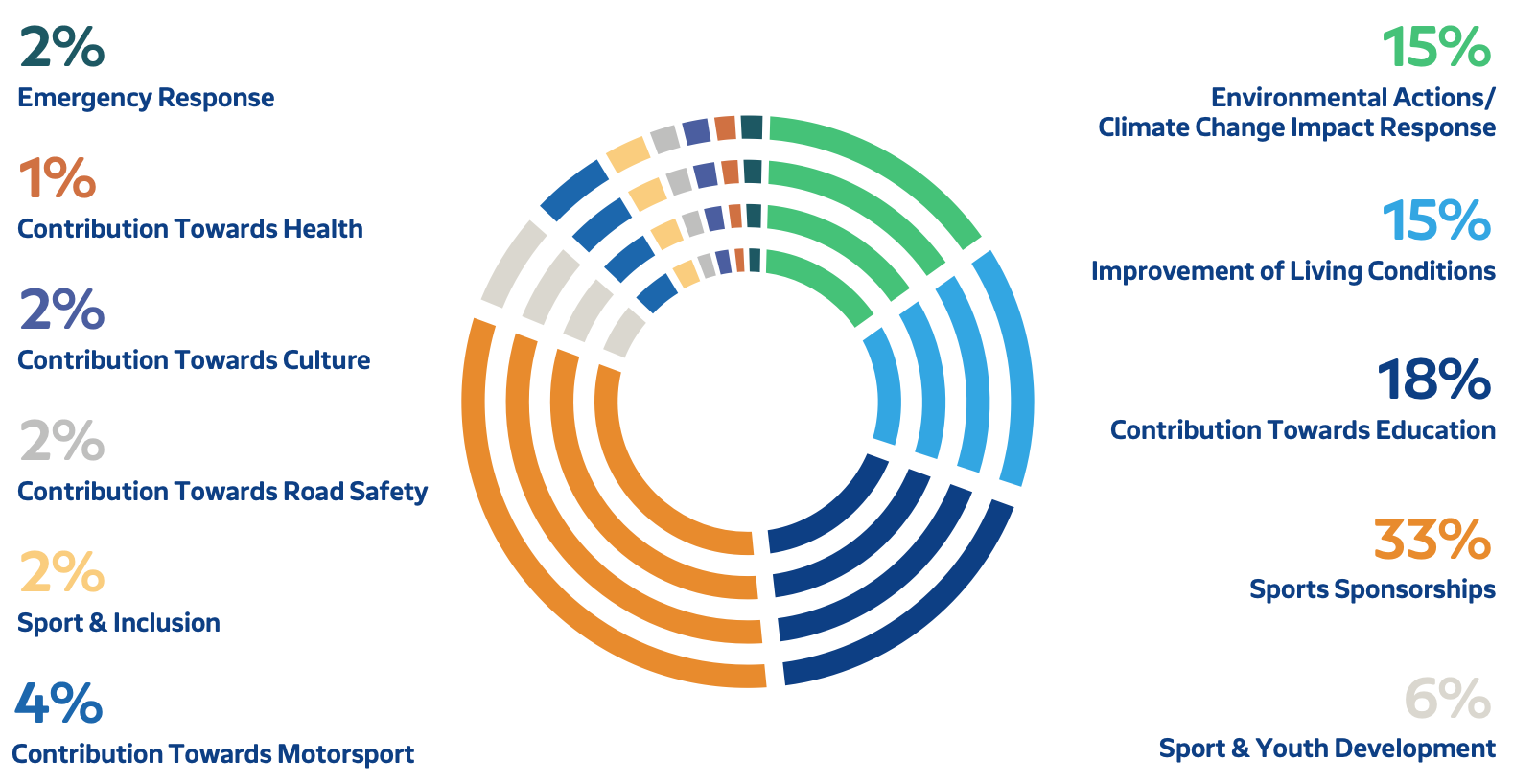
Initiatives
| Category | Value |
| Environmental Actions/Climate Change Impact Response | 2224720 |
| Improvement of Living Conditions | 2325781 |
| Contribution Towards Education | 2802873 |
| Sports Sponsorships | 5043485 |
| Sport & Youth Development | 829752 |
| Contribution Towards Motorsport | 654984 |
| Sport & Inclusion | 360686 |
| Contribution Towards Road Safety | 244749 |
| Contribution Towards Culture | 257862 |
| Contribution Towards Health | 209516 |
| Emergency Response | 225649 |
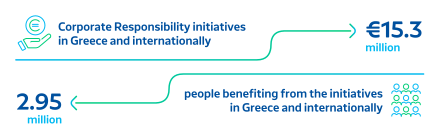
Overview of the Corporate Responsibility Program per Area of Impact
Contribution to Education
The Group consistently supports the younger generation, creating opportunities for learning and development through targeted initiatives that promote excellence and strengthen education, specialization, and innovation. In this context, the “Empowering Youth” program constitutes a long-term and meaningful investment in human capital, aiming to empower young individuals, foster high value-added skills, and support their academic, professional, and personal development.
Since 2009, the program has been implemented in the areas where the Group operates, with a strong focus on local communities, while gradually expanding nationwide, offering opportunities to school students, university students, and young scientists. Through its initiatives, it rewards outstanding graduates of General and Vocational High Schools from the Thriasio Plain, West Thessaloniki, and the Municipality of Kozani, supports postgraduate studies in Greece and abroad, and contributes to the development of a modern knowledge and development ecosystem.
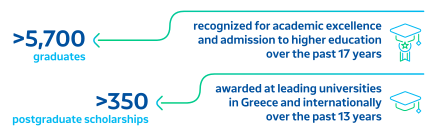
Overall, since the program’s inception, more than 5,700 high school graduates have been recognized for their academic performance, while more than 350 postgraduate scholarships have been awarded for studies at prestigious universities in Greece and internationally.
The “HELLENiQ ENERGY Alumni Community” serves as an active network of scholarship recipients, maintaining their connection with the Group, fostering networking and knowledge exchange, and creating opportunities for professional and personal development. In parallel, the Center of Excellence for Sustainability and Energy, established in collaboration with “Alba Graduate Business School”, operates as a hub of knowledge and collaboration, bringing together academia, the market, and institutional stakeholders, with the aim of advancing research, innovation, and education in the fields of energy and sustainable development.
In addition, the Group undertakes initiatives aimed at enhancing the educational environment for primary and secondary education students, both through infrastructure upgrades and targeted educational programs. Indicatively, in collaboration with the non-profit organization “Agoni Grammi Gonimi”, it implements the “Earth 2030” Educational Suitcase program for primary and lower secondary school students, aiming to enhance knowledge and raise awareness of the 17 United Nations Sustainable Development Goals.

Environmental Interventions and Awareness Initiatives
Contribution to environmental protection and the mitigation of climate change impacts constitutes a key pillar of the Group’s Corporate Responsibility strategy. In this context, HELLENiQ ENERGY implements initiatives that foster environmental awareness and enhance stakeholder engagement through meaningful interventions aimed at upgrading the urban landscape and promoting experiential learning, with a dedicated focus on younger generations.
These initiatives include public space clean-ups, upgrades of parks and communal areas, green interventions, as well as educational activities on biodiversity and climate change. During the period 2022–2025, more than 3,600 students and 420 employees participated in these actions; over 6.5 tons of waste were collected, more than 300 trees and plants were planted, and green areas covering a total of 2,300 m² were upgraded. In 2025, the initiatives continued with the participation of more than 1,000 students, in collaboration with organizations such as “Agoni Grammi Gonimi”, “The Bee Camp”, and “MIO–ECSDE”.
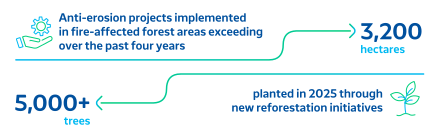
At the same time, the Group continued restoration and recovery interventions following natural disasters. Within the framework of its role as Restoration and Reforestation Sponsor, it implemented anti-erosion projects over the past three years in fire-affected forest areas exceeding 3,200 hectares. In 2024, these interventions were completed in Western Attica, followed by Rapentosa (Marathon) in 2025. Furthermore, new reforestation projects were carried out in 2025 in the municipalities of Penteli and Pallini, covering a total area of 121.73 hectares, with more than 5,000 trees planted and the participation of 130 employee volunteers and their family members.
Additional environmental education and restoration initiatives were developed through the Group’s subsidiary Enerwave, including programs such as “Green Schools”, as well as actions supporting the “Environmental Information Center of Kokkinomilia” in Northern Evia. In the countries where the Group operates, similar initiatives were implemented through its subsidiaries, including strengthening the operational readiness of the Fire Service in Cyprus and the installation of photovoltaic systems by OKTA in schools, social structures, and public institutions in the Republic of North Macedonia.
Improving Living Conditions
Committed to supporting vulnerable social groups and promoting social well-being, the Group consistently implements initiatives aimed at improving quality of life by addressing fundamental social needs, such as access to heating, food security, and healthcare services, as well as by providing support in emergency situations. Through these actions, the Group actively strengthens social cohesion in the areas where it operates.
Through its subsidiaries, HELLENiQ PETROLEUM S.A. and EKO ABEE, the Group implemented, in 2025, for the 17th consecutive year, the “Wave of Warmth” heating oil donation program, providing more than 275,000 litres of heating oil to 160 public school units in neighboring municipalities in the Thriasio Plain, West Thessaloniki, and Western Macedonia. This initiative contributes to the creation of a warm and welcoming school environment and appropriate learning conditions for thousands of students. At the same time, the Group continued in 2025 its program supporting social grocery stores and soup kitchens, providing significant quantities of food and other essential goods to community structures in the Thriasio Plain, West Thessaloniki, and Kozani.
Within the same framework of strengthening the resilience of local communities, HELLENiQ ENERGY donated in 2025 a state-of-the-art, four-wheel-drive ambulance to the «West Fragkista Health Centre» of the 5th Health Region of Thessaly and Central Greece, significantly enhancing the provision of emergency pre-hospital care in remote and mountainous communities of Evrytania. This initiative follows a previous donation of modern medical equipment to the same Health Region, in response to the consequences of the devastating floods of September 2023.
In parallel, through Enerwave, the Group supported social inclusion and health initiatives, such as the “Donate Kilometers to Sizoi” campaign, converting participation into financial support for an Early Childhood Intervention Program for children with visual impairments.
Similar initiatives were also implemented in the countries where the Group operates internationally. In Cyprus, the Corporate Responsibility program “Warm Embrace” continued to support social structures in mountainous areas; in Bulgaria, heating oil was provided to protected facilities for people with disabilities; in Serbia and Montenegro, donations were made to support children and social institutions; while in the Republic of North Macedonia, the provision of heating fuel to SOS Children’s Villages continued.
Overall, these initiatives make a meaningful and lasting contribution to improving the daily lives of vulnerable groups, reducing social inequalities, and strengthening the resilience of local communities.

Contribution to Sports
The Group consistently supports inclusive and accessible sports, recognizing their role as a means of empowering younger generations, promoting equality, and strengthening social cohesion. In this context, it maintains long-term partnerships with institutions and initiatives that have a significant impact in Greece and internationally, while also promoting road safety through targeted awareness-raising and education initiatives.
The Group’s strategy in the field of sports is structured around four key pillars: promoting participation in sports and skill development, fostering inclusion, supporting motorsports, and implementing strategic sports sponsorships.
Under the “Sports and Youth Development” pillar, the Group supports sports clubs, smaller-scale events, and educational programs for children and adolescents, such as the Hellenic Basketball Federation’s “Blue and White Stars” program. These initiatives encourage youth participation in sports and promote values such as teamwork, collaboration, respect, and fair play. At the same time, the Group supports local sports teams and promotes workplace sports, encouraging employee participation in related activities.
Under the “Sports and Inclusion” pillar, the Group is a Gold Sponsor of the Hellenic Paralympic Committee, with the partnership renewed and upgraded in 2024 and further expanded in 2025. In this context, three “Paralympic Panorama” events were held in Athens, the Thriasio Plain, and West Thessaloniki, engaging students and local communities and actively promoting equality, inclusion, and sports without barriers.
In the field of motorsports, EKO continued in 2025 its long-standing support of the “EKO Acropolis Rally”, serving as Grand Sponsor and Title Sponsor. This contribution supports the preservation of the event’s international profile and its positive impact on the local communities where it takes place. In parallel, the Group consistently promotes road-safety awareness through targeted public communication initiatives.
Within the framework of Strategic Sports Sponsorships, EKO has been supporting the Hellenic Basketball Federation for more than ten years as “Grand Sponsor” of all National Basketball Teams (Men, Women, and Youth).
At the same time, along with EKO Cyprus, which serves as “Gold Sponsor” of the country’s National Basketball Teams, the Group participated as “Event Sponsor” of the “2025 FIBA EuroBasket”, further strengthening its presence in the international basketball landscape.
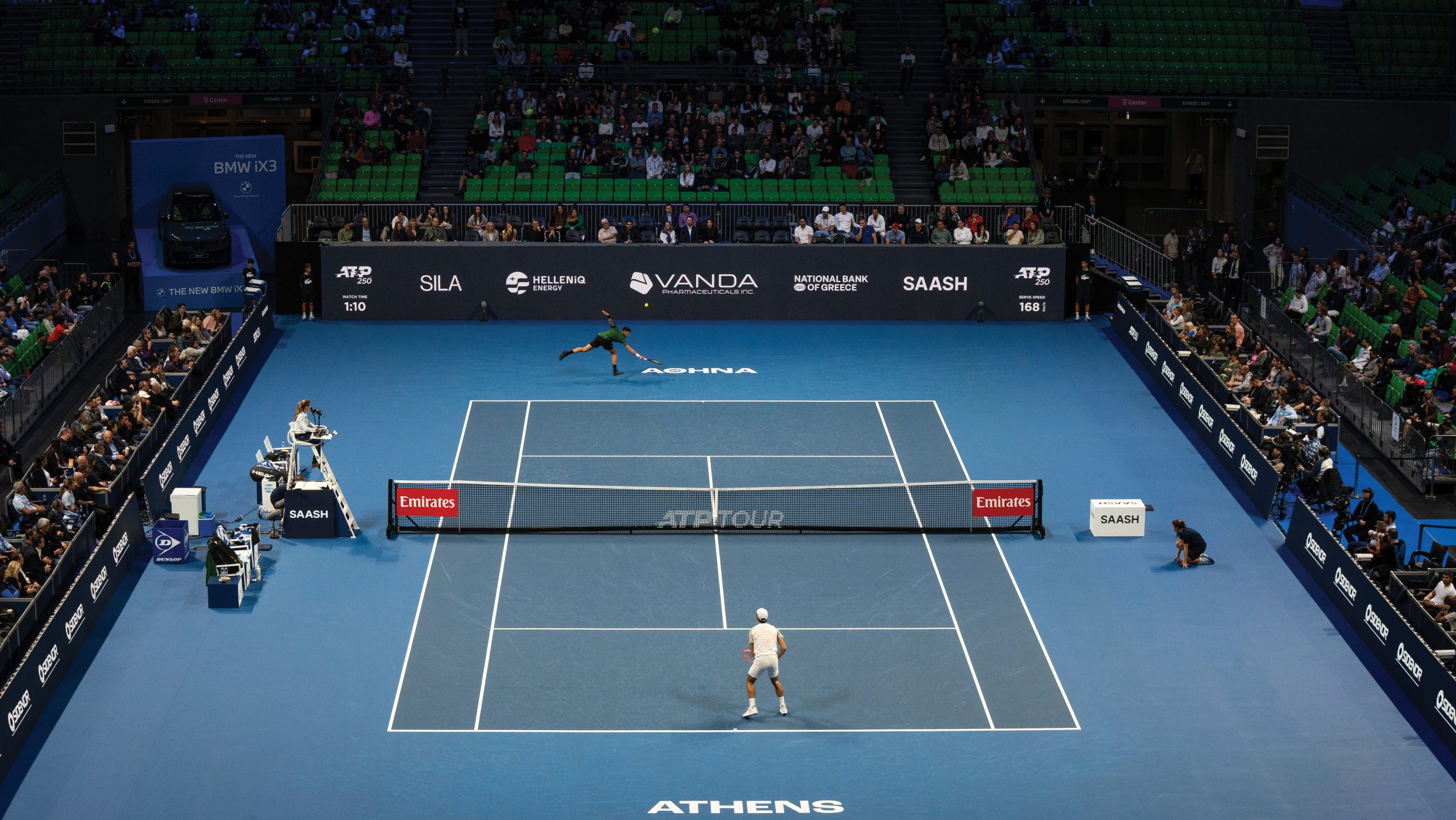
In addition, 2025 marked a milestone for the Group’s international presence in tennis, through the support of events such as the “Davis Cup” and “ATP 250 Tournament”. Furthermore, through its subsidiaries in Serbia, Bulgaria, and Montenegro, the Group continues to support national federations, sporting events, and development programs, with a focus on younger generations.





Employees Volunteering
The Group consistently promotes volunteering as an integral part of its corporate culture, encouraging the active participation of its employees in structured initiatives focused on social solidarity, environmental protection, and community support in Greece and internationally.
In 2025, a total of 1,128 employees participated in volunteer activities across the countries where the Group operates, including 862 in Greece and 266 internationally.
In the field of sports, 474 employee volunteers took part in national and international marathons in Greece and abroad, linking their participation to the support of social organizations and the promotion of messages of solidarity. In Serbia, employees of EKO Serbia also participated in the “Belgrade Marathon”, supporting the work of the “BelHospice” organization.
In addition, on the occasion of International Women’s Day, the expansion and refurbishment of the “WEHub – Female Empowerment Hub of the Women’s Entrepreneurship Association of Greece” in Thessaloniki was completed. This multifunctional space, covering 600 m², provides training, mentoring, and skills-development services to women from West Thessaloniki and the wider region. The project was supported by the active participation of employee volunteers, enhancing both the functionality and capacity of the space.
In the environmental sector, volunteer tree-planting and reforestation initiatives were implemented in Greece and internationally. In Greece, 134 employees and their family members participated in tree-planting activities in Penteli and Pallini, contributing to the restoration of more than 12 hectares and the planting of 625 trees. In addition, beach clean-up actions were organized in Aspropyrgos (Western Attica) and Kalohori (West Thessaloniki), with the participation of more than 170 employees and their families, during which over 1,500 kg of waste and 5,570 cigarette butts were collected. Similarly, in the Republic of North Macedonia, 150 employee volunteers of OKTA participated in tree-planting initiatives.
Within the framework of the Group’s program supporting social grocery stores and soup kitchens, volunteer initiatives were carried out in the Thriasio Plain and West Thessaloniki during the Christmas and Easter periods, contributing to the preparation and distribution of meals and the coverage of basic needs of vulnerable social groups.
In the field of healthcare, the Group continued to systematically support voluntary blood donation. In 2025, the network of active volunteer blood donors comprised 403 employees, including 395 in Greece and 8 in Serbia. Through organized blood-donation drives, more than 400 units of blood were collected, covering over 200 medical needs. The provision of one additional day of leave for each participation serves as a recognition of employees’ social contribution.
Overall, the Group’s employee volunteering initiatives in 2025 contributed to generating a measurable social and environmental impact, strengthening the Group’s connection with local communities and supporting its responsible and sustainable operation across all regions where it operates.

Consumers and End-Users
The Group’s extensive network of fuel stations and facilities ensures uninterrupted operations, including in remote areas, thereby meeting consumers’ need for reliable access to energy. All fuel products supplied by HELLENiQ ENERGY—including liquefied petroleum gas (LPG), gasoline, diesel, kerosene, fuel oil and bitumen—comply with specifications set by national and European legislation. These products are available to commercial customers, industrial users and resellers, while the Group’s significant storage capacity ensures continuous fuel supply in the markets it serves.
The growing demand for new products and services, such as biofuels and renewable energy sources (RES), highlights the Group’s important role in addressing consumers’ needs for sustainable energy solutions. HELLENiQ ENERGY continuously monitors market developments and actively promotes sustainable mobility by supporting initiatives aimed at transforming the technological structure and fuel mix of transport. In this way, the Group facilitates the transition to a low-carbon economy, supports climate-change mitigation targets and creates opportunities for new revenue streams through investments in advanced biofuels and the expansion of electric vehicle (EV) charging infrastructure.
Through its subsidiary EKO, the Group contributes to the reduction of CO₂ emissions in the road and aviation transport sectors by offering sustainable fuels, including biodiesel, bioethanol and Sustainable Aviation Fuel (SAF), in commercial fuel blends. In addition, EV charging services are provided by ElpeFuture, a subsidiary of the Group, which operates fast-charging stations at selected EKO and bp fuel stations along major motorways, among other services.
The Group has also established processes to engage with consumers and end-users, ensuring a high level of service and responsiveness to their needs and addressing material impacts. The call center operates on a 24/7 basis, serving consumers and end-users across the entire fuel station network. In 2025, the call center handled 46,272 calls.
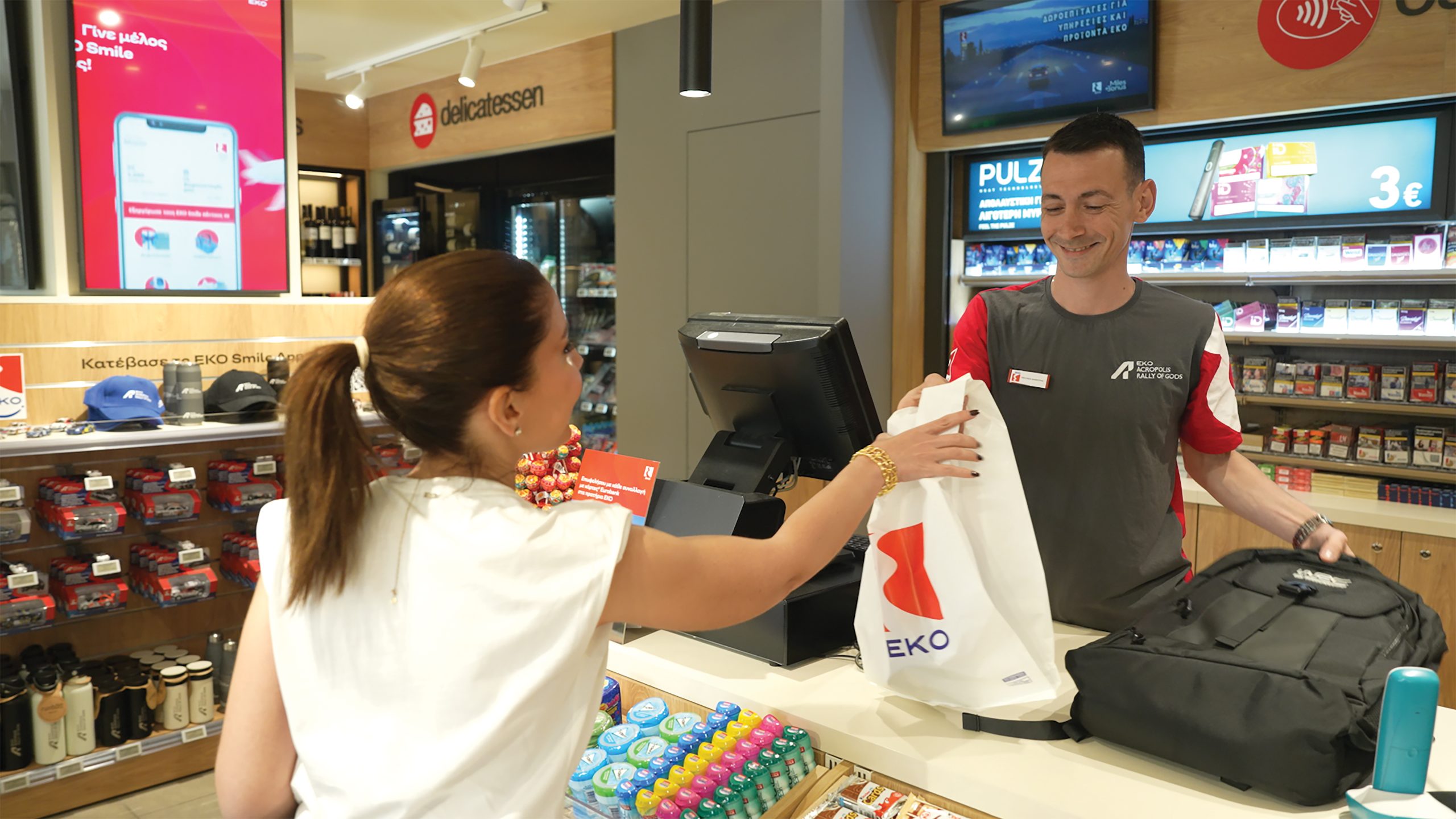
Customer satisfaction surveys provide valuable insights into the performance of products, services and the overall customer experience. For this reason, HELLENiQ ENERGY places particular emphasis on these surveys, as they support the assessment of customer satisfaction, the identification of customer needs and the continuous improvement of service quality. With a strong focus on delivering a positive customer experience at fuel stations, HELLENiQ ENERGY, through its subsidiary EKO ABEE, has implemented a range of programs and initiatives aimed at enhancing service quality and better addressing customer needs. Each fuel station is reviewed by a mystery shopper between four and twelve times per year. In 2025, a total of 3,502 inspections were carried out across fuel stations throughout Greece.
Digital transformation is a cornerstone of the Group’s sustainable development strategy, with more than 180 related initiatives planned for implementation in the medium term (2027–2030). These initiatives include the development of the “fuel stations of the future”, enhancing operational efficiency and delivering positive impacts for consumers and society. The adoption of digital tools and methodologies increases productivity, flexibility and process quality, enabling faster, more personalized service and greater transparency for consumers. At the same time, the digital retail program expands the reach of the loyalty scheme across Southeastern Europe, strengthening engagement with retail consumers while maintaining consistent collaboration with corporate customers and partners, thereby generating added commercial value for all parties.
Product quality assurance is ensured through continuous quality controls throughout the year at all stages of the supply chain, from the refinery to the point of sale. The Group maintains documented evidence of compliance with defined acceptance criteria, and products are made available to customers only after successful verification through audits across the supply chain. In Greece, during 2025, EKO conducted 105,028 quality analyses on 8,577 fuel samples from fuel stations. In addition, 8,401 aviation fuel analyses and 30,250 lubricant analyses were performed at EKO’s Chemical Laboratory.
Fuel station personnel receive extensive training in customer service and sales promotion, with the aim of preventing adverse impacts on consumers and end-users. In 2025, training programs were implemented across the partner networks KALYPSO KEA S.A. and EKO ABEE, covering fuel station managers, owners and staff. Training modules included topics such as EKO–Castrol lubricants, customer service and sales promotion, and heating diesel distribution. Overall, 7,535 individuals received theoretical and practical training in Greece, corresponding to a total of 14,360 training hours.
Corporate Culture
The Group is committed to high standards of integrity and responsible operations, implementing effective mechanisms and reporting procedures to prevent and address incidents such as corruption, bribery, misconduct or retaliation against individuals who report violations.
The corporate governance framework of HELLENiQ ENERGY Group, as a comprehensive set of principles, rules and practices, has been designed to ensure orderly and uninterrupted operation, while safeguarding the interests of its stakeholders with integrity and transparency, in full alignment with the applicable regulatory and institutional framework.
Mechanisms for identifying, reporting and investigating concerns related to unlawful conduct or conduct contrary to the Group’s Code of Conduct or other relevant internal regulations are described in detail in the applicable Code. The Group has established a dedicated Whistleblowing platform, operated by an independent third party, which enables the submission of reports either on a named or anonymous basis.
During 2025, no convictions were issued against the Group, its subsidiaries or members of senior management or governing bodies for violations of anti-corruption or anti-bribery legislation. Accordingly, no fines or other financial penalties were imposed in connection with incidents of corruption or bribery.
Cyber Security
The HELLENiQ ENERGY Group, with its diversified presence in the energy sector, implements a comprehensive digital transformation program, systematically upgrading its operations through the use of advanced digital technologies. These initiatives enhance efficiency and innovation, while at the same time expanding the Group’s digital footprint and increasing its exposure to cybersecurity risks.
Given that the Group’s activities are part of critical infrastructure, a successful cyberattack could affect the uninterrupted provision of essential services, cause broader impacts on society and the economy, and jeopardize the achievement of strategic objectives related to digital transformation.
Cybersecurity is acknowledged as a significant business risk, particularly in light of the potential secondary consequences, such as spillover effects, resulting from a cyberattack. Accordingly, the Group implements comprehensive and rigorous protective measures throughout every phase of its digital transformation. This approach safeguards business continuity and strengthens the trust of stakeholders. Mechanisms for the prevention, monitoring and management of cybersecurity risks constitute a core element of the Group’s business model, supporting the effective management of digital challenges.
For the current year, the Group has set a key objective of zero significant cybersecurity incidents, aiming to ensure uninterrupted operations, data integrity and the trust of stakeholders. This objective forms part of the Group’s overall cybersecurity strategic framework, with emphasis placed both on prevention and on the timely detection and effective management of related risks.
Governance
HELLENiQ ENERGY’s Corporate Governance
The institutional framework governing the Company’s operation and obligations is L. 4548/2018 on the reform of the law of sociétés anonymes and L. 4706/2020 on corporate governance. The Company’s Articles of Association can be assessed through the Company’s website under the section titled Articles of Association.
As a company listed on Euronext Athens, the Company operates within a framework of enhanced transparency and accountability requirements. These obligations relate, inter alia, to the application of sound corporate governance principles, the timely and reliable disclosure of information to investors and competent supervisory authorities, as well as the consistent publication of financial and other corporate information.
The applicable regulatory and supervisory framework shapes the Company’s processes and practices, ensuring compliance with prevailing standards, the protection of shareholders and the strengthening of market confidence.
Within the scope of its responsibilities, the Board of Directors appointed an independent external auditor to assess the adequacy and effectiveness of the Company’s Internal Control System and that of key subsidiaries of the Group, as well as the implementation and effective operation of the Corporate Governance System. The assessment covered the period from 1 January 2023 to 31 December 2025, with a reference date of 31 December 2025, and was carried out by ERNST & YOUNG (Hellas) Certified Auditors – Accountants S.A., in accordance with internationally recognized assurance standards.
The results of the assessment did not identify any material weaknesses, confirming the adequacy and effective functioning of both the Internal Control System and the Corporate Governance System of the Company.
01. Corporate Governance Code
The Company has adopted the Hellenic Corporate Governance Code of the Hellenic Corporate Governance Council (HCGC) and is accessible on the HCGC’s official website at the following e-address: https://www.esed.org.gr/en/code-listed.
Aside from the HCGC’s website, the Code is available on HELLENiQ ENERGY’s website.
During 2025, the Company complied with the provisions of the above Code, with the deviations stated below in section 2.
The Company continuously observes and evaluates developments within the prevailing regulatory framework, as well as emerging best practices in corporate governance, in order to ensure strict adherence to applicable regulations. Furthermore, the Company endeavors to establish and maintain comprehensive policies, values, and guiding principles that govern its operations. These efforts are undertaken with the objective of promoting transparency and protecting the interests of shareholders and all relevant stakeholders.
During 2025, the Company issued an Artificial Intelligence Systems Management Policy in accordance with Regulation (EU) 2024/1689 on Artificial Intelligence (AI Act), and proceeded to revise/update:
- the Audit Committee’s Operation Regulation,
- the Sustainability Committee’s Operation Regulation,
- the Operation Regulation of the Group Internal Audit Unit,
aiming at rendering them more aligned with the latest optimal corporate governance practices.
02. Deviations from the Corporate Governance Code
Hellenic Corporate Governance Code | Explanation/Reasoning for deviating from the special practices of the Hellenic Corporate Governance Code |
Succession of the BoD Gradual replacement of the members of the Board of Directors (Special Practice 2.3.2). | The practice followed by the General Meeting of the shareholders is that the term of office of the members of the Board of Directors begins and ends at the same time. This practice has been successfully implemented, without raising an issue of lack of administration. |
BoD members' remuneration | The existing remuneration system for executive BoD members does not include provisions for the possibility of refunding part or the whole of the executive BoD members' variable remuneration, as this would amount to a discrimination at their expense compared to Company executives with the same grade. |
Recovery of variable parts of executive BoD members' remuneration (Special Practice 2.4.14) | The Company also deems that such a clause is not necessary, as the relevant remuneration is paid following an individual assessment of each executive member's performance and under no circumstances can they exceed the predetermined maximum limits on their annual ordinary remuneration. |

03. Other Corporate Governance Practices
In the context of implementing a structured and adequate corporate governance system, the Company has implemented specific good corporate governance practices, some of which are over and above those provided by the applicable legislation and relate to the BoD’s duties and its operation in general (a detailed reference to the BoD Committees follows in section 7):
Due the Company’s nature and purpose, the complexity of issues and the necessary support of the Group, which includes a number of operations and subsidiaries in Greece and abroad, and in order to be assisted in its work, the BoD has established committees, comprised of members thereof, with advisory, supervisory or/and approving authorities. These committees are outlined below:
- Strategy and Risk Management Committee
- Sustainability Committee
In addition to the above BoD committees, committees with an advisory and coordinating role have been established and operate in the Company. They comprise of senior executives of the Company and their objective is to support the work of the Management. The principal such committees are the following:
- Executive Committee
- Group Credit Committee
- nvestment Evaluation Committee
The Company has adopted corporate governance policies and procedures, which include:
- The Procedure for handling inside information and properly informing the public, which includes the appropriate mechanisms and methodologies for the assessment of information so that it may qualify as “inside”, the prohibition of abusing or attempting to abuse inside information or recommending to another person to proceed to an abuse of inside information, as well as the prohibition of unlawful disclosure.
- The Procedure for the compliance of persons discharging managerial responsibilities, which includes a clear and detailed recording of the requisite notification actions, aiming at strengthening transparency regarding the transactions of management officers and of the persons closely associated therewith and identifying potential risks (abuse, market manipulation, etc.).
- The Policy and Procedure on related party transactions, which sets out the mechanisms for identifying, supervising and approving the transactions in question. In the context of the procedure relevant documents and information concerning related parties are kept and updated. The information on the above transactions among associate companies are included in the report accompanying the Company’s financial statements, in order to be disclosed to the shareholders. According to the provisions of the relevant law, Company transactions of any kind with parties related to it, are permissible only following approval by the BoD or the General Meeting, as per case, unless they fall under the exceptions stated in the law.
- The Policy and Procedure for preventing and managing conflict of interest situations, which provides for designating the way in which conflict of interest may arise, for receiving reports or clarifying doubts in cases of such (actual or potential) conflict and for taking appropriate measures for managing them.
04. Main Features of the Systems of Internal Controls and Risk Management in Relation to the Financial Reporting Process
The Group System of Internal Controls and Risk Management in relation to the financial statements’ and financial reports’ preparation process includes controls and audit mechanisms at different levels within the Organization, which are described below:
a) Group level controls
Risk identification, assessment, measurement and management
The prevention and management of risks forms a core part of the Group’s strategy. The scope, size and complexity of the Group’s activities require a composite system of methodical approach and treatment of risks, which is applied by all Group companies.
The identification and assessment of risks is carried out mainly during the strategic planning and the business plan preparation phase. The benefits and opportunities are examined both in the context of the Company’s operations, but also in relation to the several and different stakeholders who may be affected.
The risks examined include a) operational, b) financial and c) strategic risks, as well as d) regulatory compliance and supervision risks. More specifically and indicatively, issues that are examined include the effect of operational availability of units, supply chain, human resources, technological developments, taxation, interest rates, commodity prices, exchange rates, among others. Also, issues related to health, safety and environmental, corporate governance and regulatory compliance risks are assessed, risks related to the business model and strategy, as well as market trends (competition, geopolitical developments, regulatory developments).
Planning and monitoring / Budget
The Company’s progress is monitored through a detailed budget per operating sector and specific market. The budget is adjusted at regular intervals to consider the changes in the development of the Group’s financials that depend greatly on external factors, including the international refining environment, crude oil prices and the euro / dollar exchange rate. Management monitors the Group’s financial results through regular reporting, comparisons vs the budget, as well as through Management Team meetings.
Adequacy of the Internal Control System
The Internal Control System (ICS) consists of the policies, procedures and tasks which have been designed and implemented by the Group’s Management for the effective management of risks, the achievement of business objectives, for ensuring the reliability of the financial and managerial information and compliance with Laws and regulations.
The independent Group Internal Audit Unit (GIAU), through conducting periodic assessments, ensures that the risk identification and management procedures applied by the Management are adequate, that the ICS operates effectively and that information provided to the BoD regarding the ICS, is reliable and of good quality.
The Group Internal Audit Unit draws up a short-term (annual), as well as a rolling long-term (three-year) Audit Plan based risk assessment process conducted by the Risk Monitoring and Management Division, as well as on other issues identified by the Audit Committee and the Management also in past audit reports. The Audit Committee is the supervisory body of the Group Internal Audit Unit.
The Group Internal Audit Unit submits quarterly reports to the Audit Committee to facilitate the systematic evaluation of the adequacy and effectiveness of the Internal Audit System. The reports of the Management and the Group Internal Audit Unit provide an assessment of the significant risks and the effectiveness of the Internal Audit System as regards their management. Through the reports, any possibly identified weaknesses, their actual or potential impact, as well as the Management’s actions to correct them are communicated. The results of the audits and the monitoring of the implementation of the agreed improvement actions are taken into account in the Company’s Risk Management System.
In order to safeguard the independence of the statutory audit of the Group’s financial statements, the Board of Directors adheres to a defined policy designed to facilitate the formulation of a recommendation to the General Meeting concerning the appointment of an External Auditor. Indicatively, this policy provides, inter alia, for the selection of the same audit company for the entire Group, as well as for the auditing of the consolidated financial statements and tax compliance reports. Lastly, a certified auditor is appointed from an internationally recognized firm is elected, while, at the same time, his/her independence is safeguarded.
Compliance Office
Compliance Office is responsible for monitoring the Group’s Compliance Risk and forms part of the Internal Control System (ICS) and reports at an operational level to the Audit Committee and at an administrative level to the Director of Monitoring and Risk Management. By its report to the Audit Committee, it contributes to the ICS’s improvement and adequacy, as its objective is to ensure that appropriate and updated policies and procedures are set up and implemented, in such a way that the Company’s full and constant compliance to the applicable regulatory framework is achieved.
Monitoring and Risk Management Division
The purpose of the Monitoring and Risk Management Division is to centrally monitor and coordinate the management of the Group’s exposure to internal and external risks. The Division is independent from executive activities and supports the ICS’s operation through determining principles and setting up and implementing appropriate and updated policies and procedures governing their identification, assessment, quantification/measurement, monitoring and management.
Roles and responsibilities of the Board of Directors
The role, powers and relevant responsibilities of the BoD are set out in the Company’s Bylaws (Internal Regulation) that has been approved by the BoD.
Financial fraud prevention and detection
In the context of risk management, the areas that are considered to be of high risk for financial fraud are monitored through appropriate Control Systems and accordingly increased controls are in place. Examples include the existence of detailed organizational charts, operation regulations (procurement, investment, oil products’ market, credit, treasury management), as well as detailed procedures and approval authority levels. In addition to the internal controls applied by each Division, all Company operations are subject to audits by the Group Internal Audit Unit (GIAU), the results of which are submitted to the BoD.
Bylaws (Internal Regulation)
The Company’s Bylaws delineate, among other provisions, the authorities and responsibilities assigned to the principal executive positions, thereby facilitating the appropriate segregation of powers within the organization. A summary of the approved Bylaws have been posted on the Company’s website.
Furthermore, the companies “HELLENIC FUELS AND LUBRICANTS SINGLE-MEMBER INDUSTRIAL AND COMMERCIAL SOCIETE ANONYME” and “HELLENIC PETROLEUM SINGLE-MEMBER SOCIETE ANONYME”, as key Company subsidiaries, adopted bylaws on 15.07.2021 and 20.01.2022, respectively. Following the Company’s acquisition of full control of ENERWAVE S.A. (formerly ELPEDISON S.A.) on 15.07.2025, the Company ensures that ENERWAVE S.A., as a significant subsidiary, adopts an operations regulation.
Group Code of Conduct
In the context of the good corporate governance fundamental obligation, the Company has drawn up and adopted since 2011 a Code of Conduct, which has been approved by the Company’s BoD. The Code of Conduct summarizes the principles according to which every individual, employee or third party involved in the operation of the Group, as well as every collective body thereof, should act within the framework of their duties. For this reason, the Code constitutes a practical guide to the day-to-day tasks of all employees of the Group, but also of third parties who cooperate with it.
The Group Code of Conduct is available on the Company’s website, with its updated version implemented as of February 2025, reflecting insights gained over 14 years and addressing recent legislative developments.
Furthermore, in 2024 the Policy for the Protection of Persons who Report Breaches of Union Law (Whistleblowing) was enacted. In this context, a dedicated reporting platform has been launched, enabling both identified and anonymous submissions, while ensuring confidentiality and the protection of the reporting individuals. Both the Whistleblowing Policy and the reporting platform can be accessed via the Company’s website.
Concurrently, in compliance with Law 4808/2021, which, among other stipulations, enacts the ratification of Convention No. 190 of the International Labor Organization regarding the eradication of violence and harassment in the workplace and mandates the implementation of pertinent measures and regulations, the Policy Against Violence and Harassment in the Workplace is uniformly enforced throughout all entities comprising the Group.
Data Protection Office
In the context of complying with the Personal Data Protection Regulation, the Company has established a Personal Data Protection Office (PDPO), by appointing a Data Protection Officer (DPO) at a Group level, but also in specific subsidiaries. The PDPO has drawn up the appropriate policies and procedures for the effective protection of the privacy of personal data processed by the Group and ensures their implementation and the provision of support in matters of personal data protection.
The Data Protection Office reports administratively to the Chief Executive Officer and functionally to the Board of Directors. Drawing upon the expertise acquired during six years of operational experience within the Personal Data Protection Office, all policies pertaining to the safeguarding of personal data are presently undergoing the final stages of revision and enhancement.
Evaluation of the adequacy and effectiveness of the Company’s Internal Control System and the implementation and effectiveness of the Corporate Governance System
The Board of Directors assigned to ERNST & YOUNG (Hellas) Certified Auditors – Accountants S.A. the independent evaluation of the adequacy and effectiveness of the Company’s Internal Control System (ICS) for the period from 1 January 2023 to 31 December 2025, as well as the assessment of the implementation and effectiveness of the Corporate Governance System (CGS) with a reference date of 31 December 2025.
The evaluation was conducted in accordance with the relevant decisions of the competent supervisory authorities and applicable international assurance standards, covered the Company’s significant subsidiaries, and was completed in February 2026. No material weaknesses were identified in either the Internal Control System or the Corporate Governance System. The Company will submit the relevant summary evaluation report to the Hellenic Capital Market Commission within the prescribed deadline and will assess the improvement recommendations put forward by the independent evaluator in relation to non-material findings.
b) Information systems’ controls
Recognizing the substantial dependence of financial reporting processes on information systems, the Group has implemented a series of measures to ensure stability and effective operation of its security mechanisms. These initiatives safeguard the integrity and accuracy of the financial records, and ensure uninterrupted IT service delivery, even in emergency situations.
To this end, the Group has appointed a Chief Information Security Officer (CISO), who reports to the Audit Committee on a quarterly basis and is responsible for managing the Information Security Framework. This framework includes cybersecurity policies and procedures that are aligned with international best practices and standards, reflecting Management’s commitment to effective cyber risk management. In addition, the existence of a dedicated cybersecurity budget ensures the implementation of specialized projects and information security measures, in collaboration with external partners, where required.
The Group implements a comprehensive, multi-faceted approach to information security, underpinned by a strategic plan that leverages advanced technologies and superior information systems. Through this framework, the Group ensures adherence to all relevant regulatory requirements and guidelines, and the General Data Protection Regulation. Additionally, the Group actively collaborates with regulatory authorities and international organizations to facilitate ongoing information exchange.
Simultaneously, the Group consistently allocates resources toward cultivating a robust culture of cybersecurity awareness across both its Information Technology (IT) and Operational Technology (OT) domains. Such efforts encompass comprehensive training initiatives delivered via e-learning platforms, in-person instructional sessions, and simulated phishing attack exercises. These measures are specifically designed to mitigate the risk of human error, which may otherwise result in detrimental incidents.
Finally, to ensure the operational effectiveness of security controls, the Group has established a comprehensive monitoring and control framework for its information systems, including multiple annual audits conducted by both internal and external parties.
c) Financial statements and financial reports’ preparation process (financial reporting) controls
In the course of preparing the Company’s financial statements, a series of specific internal controls have been established and are actively maintained. These controls pertain to the utilization of tools and methodologies that are widely recognized and accepted, based on the best international practices. The implementation of such controls is designed to ensure both the accuracy and reliability of the financial reporting process, as well as compliance with applicable regulatory standards.
Among the main areas in which these controls are applied in relation to the Company’s financial reports and statements are the following:
Setup – Allocation of Duties
- The delegation of responsibilities and authorities, both to the Company’s senior Management and to its middle and junior staff, enhances the effectiveness of the Internal Control System, while ensuring the necessary segregation of duties.
- The proper staffing of the finance department with personnel who possess the required technical expertise and experience, in line with their assigned responsibilities, is essential for smooth operations.
- Furthermore, the systematic documentation of procedures and control safeguards, along with the establishment of a clear operational model for key activities, strengthens transparency and organizational efficiency.
Accounting monitoring and financial statements’ preparation procedures
- The Company maintains uniform policies and systematic monitoring within its accounting departments, encompassing definitions, the accounting principles adopted by the Company and its subsidiaries, and detailed guidelines for the preparation of the financial statements and financial reports.
- Automated controls and verifications are implemented across the various information systems to ensure accuracy and consistency. In addition, transactions of a non-recurring nature are subject to special approval with respect to their accounting treatment.
Assets’ safeguarding procedures
- Controls are in place regarding fixed assets, inventories, cash and cash equivalents – cheques and other assets of the company, such as, for example, the physical security of cash or warehouses and inventory counts and reconciliations of physically counted quantities with those recorded in the accounting books.
- Schedule of monthly physical inventory counts to confirm inventory levels of physical and accounting warehouses; use of a detailed manual to conduct inventory counts.
Transactions’ authorization limits
- A Chart of Authorities has been established, delineating the specific powers assigned to the Company’s various officers to execute the most significant transactions or acts (e.g. purchases of raw materials and goods/services, sales, borrowings, payments, receipts, legal acts, etc.).
05. Information Required per Article 10, Paragraph 1 of Directive 2004/25/EU on Public Takeover Bids
Publication of the requisite information, in accordance with article 10 par. 1 of Directive 2004/25/EU of the European Parliament and of the Council is included in part D of this Report, per article 4 par. 7 of L. 3556/2007.
06. General Meeting and Shareholders’ Rights
The General Meeting of the shareholders constitutes the highest governing authority of the Company and possesses the authority to resolve upon any matter pertaining to the Company. The procedures governing the operation of the General Meeting, including its role, responsibilities, convocation, conditions for participation, the requirements regarding both ordinary and extraordinary quorum and majority, as well as the composition of the Presiding Board and the determination of the Agenda, are comprehensively delineated within the Company’s Articles of Association.
Each shareholder is entitled to participate in the General Meeting, provided that ownership of shares is established as of the commencement of the fifth calendar day preceding the scheduled date of the General Meeting (record date).
Shareholders’ information
The Shareholders Services and Corporate Announcements Department is entrusted with the responsibility of maintaining and updating the registry of the Company’s shareholders. Its responsibilities include providing shareholders with accurate, timely, precise, and unbiased information, as well as assisting them in the exercise of their rights.
As a listed company, the Company regularly publishes announcements aimed at ensuring the timely and equitable disclosure of information to the investment community. Relevant information is provided in a manner that promotes transparency and ensures prompt access for all interested stakeholders.
All pertinent publications and announcements are made available on both the Euronext Athens and the Company’s websites and are communicated to the Hellenic Capital Market Commission.
The Investor Relations Division is responsible for the dissemination of the Company’s published editions (Annual Report, Annual and Half-Year BoD Report, Prospectuses) to all stakeholders, ensuring that the investment community is provided with accurate and equitable information regarding matters concerning the Company and the Group. Additionally, the Division manages the Company’s communications with the competent authorities, including the Hellenic Capital Market Commission, Euronext Athens, London Stock Exchange (secondary listing though Global Depositary Receipts), and Luxembourg Stock Exchange regarding bonds).
Dialogue with the stakeholders and management of their interests
Over time, the Company has committed to fostering timely and transparent communication with its stakeholders. This has been achieved through the utilization of various communication channels tailored to each stakeholder group, grounded in the principles of flexibility and the facilitation of understanding their respective interests.
In particular, with regard to stakeholders such as social partners who are associated with both broader and local communities, the Company’s collaboration is characterized by continuous engagement and is executed through ongoing and substantive dialogue.
Additional information pertaining to the stakeholders, the nature of the dialogue, and the reciprocal communication and interaction with the Company are presented in the Sustainability Report, which is part of the Annual Financial Report, as well as in this Annual Report.
07. Composition and Operation of the Board of Directors, Supervisory Bodies and Company Committees
Generally
The Company is governed by the Board of Directors (BoD), a body which is collectively responsible for its long-term success. The Board of Directors exercises its responsibilities in accordance with Greek legislation, international best practices, the Company’s Articles of Association and any decisions reached by the General Meeting of the Company’s shareholders.
The BoD comprises eleven (11) members who are elected in accordance with the provisions of Article 20 of the Company’s Articles of Association. More specifically, the Greek State has the right to appoint four (4) members to the Board of Directors if it holds a percentage above 35% of the voting shares of the Company and three (3) members if it holds a percentage below 35% but above 25% of the voting shares of the Company (Article 20, paragraphs 2a, 4 and 11 of the Company’s Articles of Association). As of 8 December 2023, the Greek State’s indirect participation in the Company’s share capital, through the HCAP15, is 31.18%. The remaining members of the BoD are elected at the General Meeting, without the participation of the HCAP (or any natural or legal person associated with it), if the right of direct appointment has been exercised. The selection of candidates for the BoD is conducted in both cases in accordance with the criteria set out in the Company’s suitability policy. The term of office for the Board of Directors is three years while members can be re-elected, and their terms are freely revocable.
The Annual General Meeting of shareholders held on 27.06.2024 appointed the current Board of Directors for a three-year term (which, in any case, is extended until the date on which the Ordinary General Meeting for the year 2027 is convened) and designated the independent non-executive members of the Board.
The BoD composition, its members’ attendance of meetings and the number of Company shares held by each member is presented in the following tables. The BoD met eleven (11) times in the year 2025.
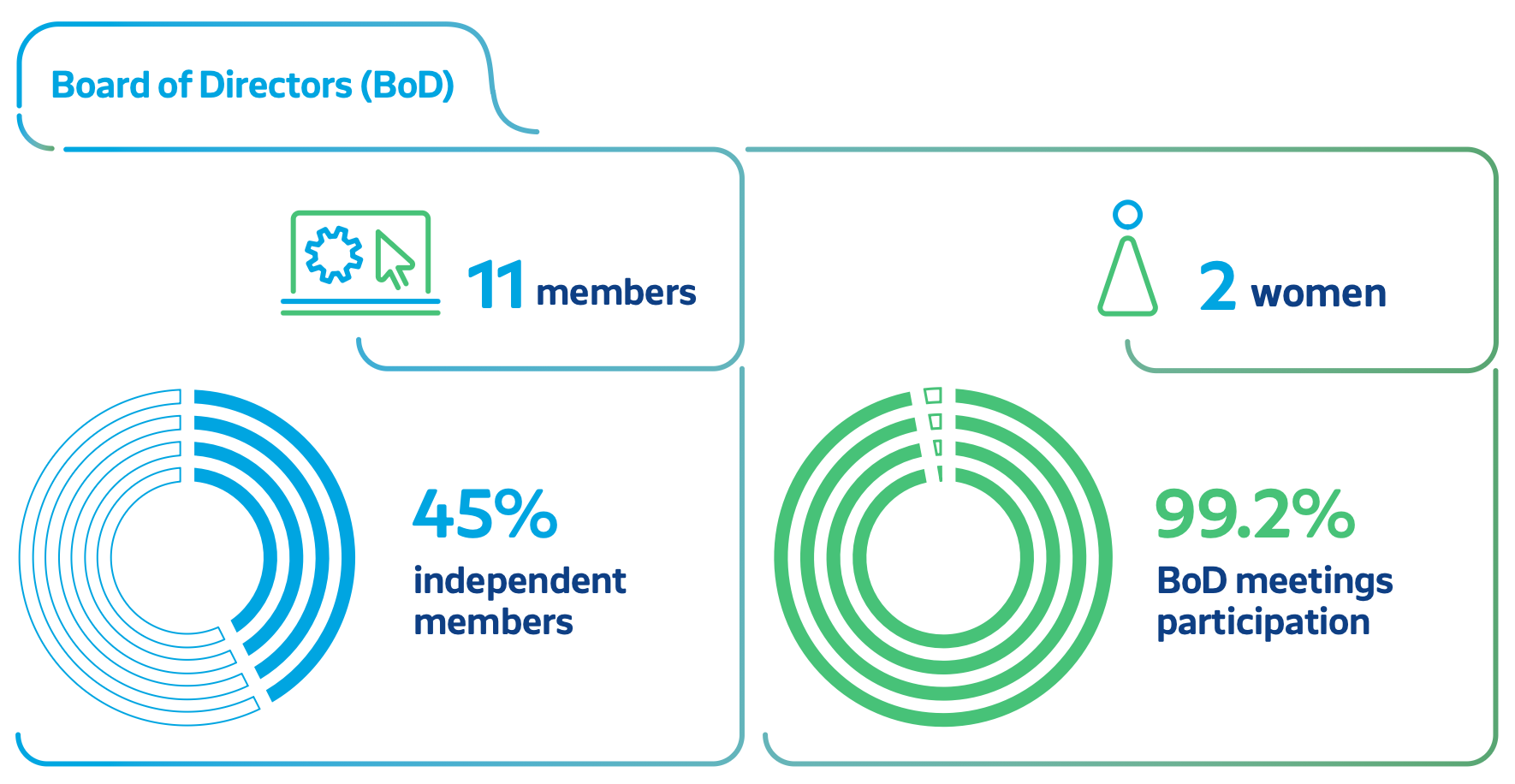
BoD Member | BoD Position | Participation in BoD meetings (total 11) | Start of participation in the BoD | Number of Company shares |
Spilios Livanos | Chairman - Non-executive member | 11/11 | 2024 | 0 |
Andreas Shiamishis | Chief Executive Officer - Executive Member | 11/11 | 2013 | 0 |
Georgios Alexopoulos | Deputy Chief Executive Officer - Executive Member | 11/11 | 2016 | 5,000 |
Iordanis Aivazis | Senior Independent Director, independent non-executive member | 11/11 | 2019 | 10,000 |
Theodoros-Achilleas Vardas | Non-executive member | 11/11 | 2003 | 15,396 |
Nikolaos Vrettos | Independent non-executive member | 10/11 | 2021 | 0 |
Stavroula Kampouridou | Independent non-executive member | 11/11 | 2024 | 0 |
Constantinos Mitropoulos | Independent non-executive member | 11/11 | 2024 | 0 |
Anna Rokofyllou | Non-executive member | 11/11 | 2024 | 0 |
Panagiotis (Takis) Tridimas | Independent non-executive member | 11/11 | 2021 | 10,000 |
Alkiviades Psarras | Non-executive member | 11/11 | 2019 | 10,000 |
BoD Members’ composition per years of participation
Participation
| Category | Percentage |
| 0 to 3 | 36 |
| 10+ | 27 |
| 7 to 9 | 19 |
| 4 to 6 | 18 |
BoD members’ experience and basic skills are presented in the following table:
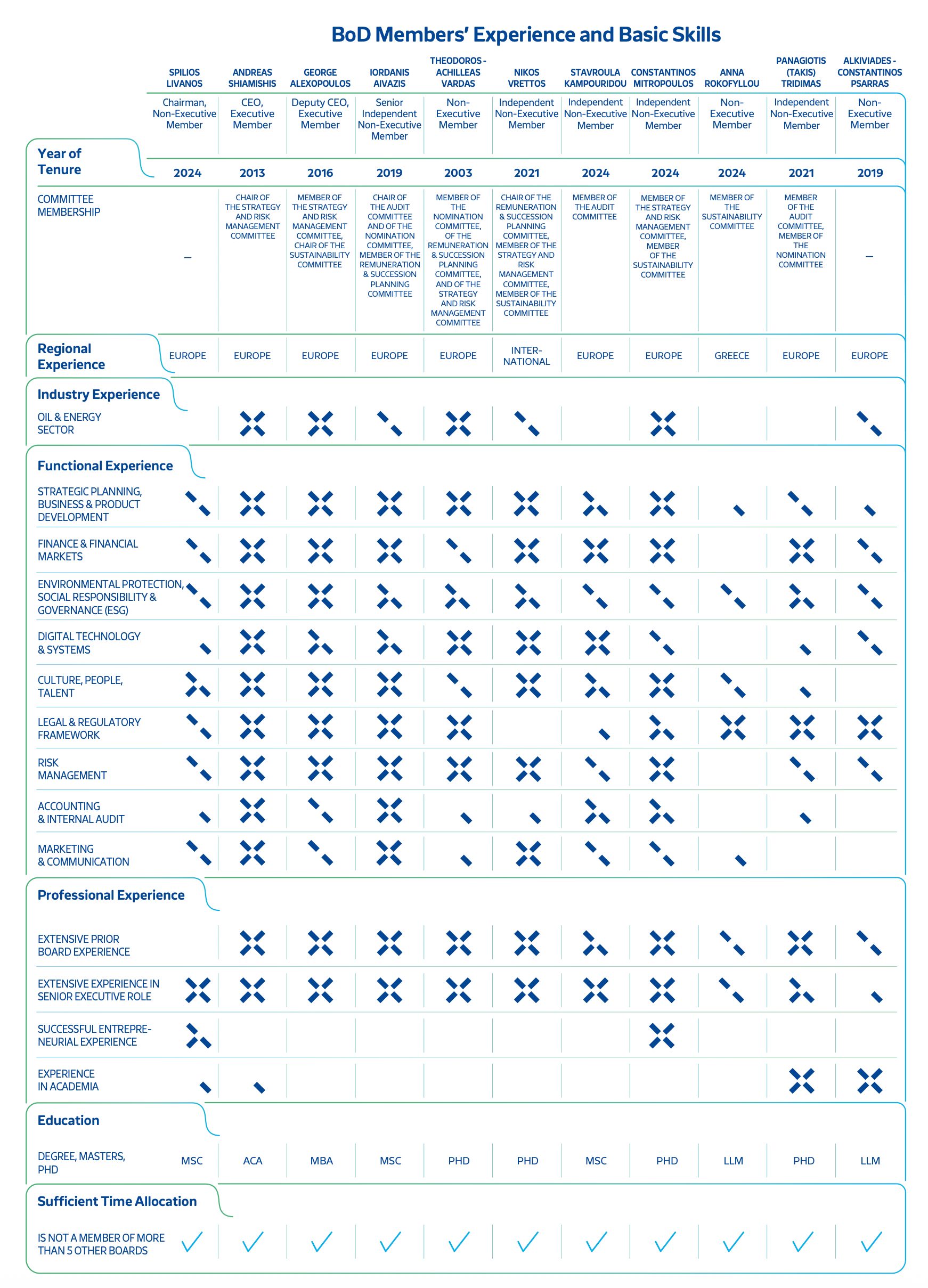
Roles and Responsibilities of the BoD
The Board of Directors serves as the highest governing authority within the Company and is principally responsible for formulating corporate strategy, as well as overseeing and controlling the management of the Company’s assets. The composition and responsibilities of the members of the BoD are determined by Law and the Company’s Articles of Association. The primary obligation and duty of the BoD members is to constantly pursue the strengthening of the Company’s long-term economic value and to protect the general company interest.
In order to achieve the company objectives and the Company’s smooth operation, the BoD may assign part of its authorities, except those requiring collective action, as well as the management administration or governance of the affairs, or the Company’s representation to the Executive Committee, the CEO, or to one or more BoD members (executive and non-executive), to Company employees or third parties. BoD members and any third party to whom BoD authorities have been delegated by the BoD are prohibited from pursuing personal interests that conflict with those of the Company. BoD members and any third party to whom BoD authorities have been delegated, have to promptly disclose to the rest of the BoD members any personal interests which might arise as a result of Company transactions falling within their duties, as well as any other conflict of personal interest with those of the Company or associate companies, arising in exercising their duties, in accordance with the Company’s relevant policies.
New BoD members’ induction
In accordance with the BoD members’ Training Policy, the new BoD members attend an induction program aimed at providing them with information that they will find useful in discharging their duties effectively.
BoD Strategy Day
In addition to the formal meetings of the Board of Directors, an annual meeting is convened to provide members with sufficient opportunity to deliberate upon significant strategic initiatives pertaining to the development of the Company and the Group. In 2025 the meeting was held on 25 June involving a discussion on strategic issues.
Conflict of interest
The BoD members have, by law, a duty of care and loyalty towards the Company. They act with integrity and to the Company’s interest and safeguard the confidentiality of the non-publicly available information.
Members of the BoD are required to abstain from any circumstances that may give rise to a conflict between their personal interests and those of the Company. They must not seek or obtain advantages or personal benefits to the detriment of the Company, except where such actions have been expressly authorized by the General Meeting of the Company’s shareholders or by the Board of Directors itself. Furthermore, members of the Board of Directors are prohibited from engaging in activities that would place them in competition with the Company. They are also obliged to avoid holding any position or undertaking any activity that could create a conflict between their private interests and the interests of the Company. This includes, but is not limited to, acquiring a significant participation in the share capital (specifically, a shareholding exceeding 0.5%), as well as occupying positions within the board of directors or management of companies that are in direct competition with the Company.
The BoD members must contribute their experience and dedicate to their duties the requisite time and attention. They must report to the BoD’s Nomination Committee other professional commitments they have, including substantial non-executive commitments to companies, both prior to assuming their duties, as well as every time that some major change occurs during their term of office.
Executive and non-executive BoD members
The executive members of the BoD, headed by the Chief Executive Officer, are occupied with the day-to-day management of affairs falling under their areas of responsibility, as well as with ensuring the smooth running of the Company. They are responsible for implementing the strategy defined by the BoD and for supervising the execution of its decisions. Special BoD decisions determine how the Company is represented and bound.
The criteria and the procedure for evaluating the independence of the BoD members are defined in detail in the Procedure for the Disclosure of Dependency Relationships of Independent Non-Executive Members of the Company’s BoD, where the rules and the procedure are established, on the one hand, for the evaluation of fulfillment of the independence criteria and, on the other hand, for the disclosure of any dependency relationships of the independent members of the BoD and the persons who have close ties with them. The Nominations Committee reviews the BoD members’ independence, on an annual basis.
The non-executive members of the BoD, including the independent non-executive members, are charged with: (i) monitoring and reviewing the Company’s strategy, its implementation, as well as the achievement of its goals; (ii) the executive members’ effective supervision, including the supervision of their performances. Non-executive Members of the BoD meet at least each year and convene for Extraordinary meetings when considered appropriate without the presence of executive members in order to discuss the performance of the latter. In 2025, the company’s independent non-executive members met on 05.05.2025 and discussed issues concerning the BoD’s and its committees’ functioning and the Company’s strategy and governance, in general.
BoD members’ participation in other companies
Except for participations in companies that qualify as related parties to the Company, members of the Board of Directors also serve on the governing, management, or supervisory bodies of the following legal entities:
First & Last Name | Position | Participation in another company |
Spilios Livanos | Chairman | BoD Chairman and CEO / DION Real Estate, Contracting, Management and Consulting Single-Member Societe Anonyme |
Andreas Shiamishis | Chief Executive Officer | Vice President Hellenic Federation of Enterprises (SEV) |
Georgios Alexopoulos | Deputy Chief Executive Officer | BoD Chairman / SEV VIAN BoD Member / American - Hellenic Chamber of Commerce |
Iordanis Aivazis | Senior Independent Director, Independent Non-Executive Member | Chairman of the Special Liquidations Committee / Bank of Greece |
Theodoros-Achilleas Vardas | Non-Executive Member | Administrator / KARIASTI CONSULTING Single-Member P.C. |
Stavroula Kampouridou | Independent Non-Executive Member | CEO / DIAS S.A. Independent Non-Executive BoD Member / Fourlis Holdings S.A. BoD Member / EACHA (European Automated Clearing House Association) |
Constantinos Mitropoulos | Independent Non-executive Member | Independent Non-executive BoD Member / MOTODYNAMICS S.A. Independent Non-executive BoD member / PLAISIO S.A. Independent Non-executive BoD member / ELTRAK S.A. Independent Non-executive BoD member / Cyprus Development Bank Ltd. BoD member / IOBE (Foundation for Economic and Industrial Research) |
BoD Chairman, Chief Executive Officer, Senior Independent Director and Committees
BoD Chairman
The BoD Chairman, who is a non-executive member, is responsible for convening, chairing and steering the meetings, for the keeping of minutes, the signing of the relevant resolutions and for the BoD’s operation, in general, as this is provided in the Company’s Articles of Association and the law. The Chairman’s responsibilities are determined on the basis of the Company’s Articles of Association, the applicable legislation, the assignment of responsibilities based on relevant BoD decisions, and the Code adopted by the Company, as set out in the Company’s Bylaws. The most senior non-executive BoD member deputizes for the Chairman, when he is absent or impeded.
Chief Executive Officer
The Chief Executive Officer serves as the principal governing authority and legal representative of the Company, bearing responsibility for all business segments and operational activities. The Group Internal Audit Unit reports administratively to the Chief Executive Officer.
Senior Independent Director
In accordance with its Operation Regulation, the BoD has appointed one of its independent members as the “Senior Independent Director” with the following responsibilities:
- supports the Chairman of the BoD,
- coordinates the effective communication between the Chairman and the BoD members,
- chairs the meetings of the non-executive members of the BoD and the procedure concerning the evaluation of the Chairman by the BoD members.
Mr. Iordanis Aivazis, the most senior among the independent non-executive members of the BoD (since June 2021), was appointed as the Senior Independent Director.
BoD Committees
The BoD has set up committees for the purpose of achieving the company objectives and the Company’s smooth operation. Each BoD Committee discharges the duties assigned to it by the BoD, acts within its remit and promptly informs the BoD regarding its actions and any developments that came to its attention.
Audit Committee
In accordance with the prevailing Operational Regulation, the Audit Committee may be constituted either as a committee of the Board of Directors, exclusively composed of non-executive members, or as an independent committee, consisting of non-executive members of the Board of Directors and external parties, or solely external parties. The nature of the Committee, the duration of its term, the number of its members, and their respective functions are determined by the Company’s General Meeting of shareholders. The Audit Committee is comprised of no less than three (3) members, who, in their majority, are independent of the Company.
The Committee’s members have adequate knowledge of the sector in which the Company is active. At least one (1) member of the Committee, which is independent, has proven adequate knowledge and experience in auditing or accounting. This member is obligatorily present at the Committee’s meetings concerning the approval of the financial statements.
Pursuant to the resolution adopted by the Annual General Meeting of Shareholders regarding the Audit Committee on 27 June 2024:
- it was determined that the Audit Committee constitutes an independent (mixed) committee, comprising of three independent non-executive members of the Board of Directors and a third person, non-member thereof,
- Mr. Panagiotis Papazoglou was elected as third (non-BoD member) member of the Audit Committee and,
- the BoD was authorized to designate the three other members of the Audit Committee from among its independent non-executive members.
Following the relevant decision, the Company’s Board of Directors, at its meeting, appointed Messrs. Iordanis Aivazis, Stavroula Kambouridou and Panagiotis Tridimas, independent non-executive members of the Board, as members of the Audit Committee. The Board of Directors confirmed that the appointed members meet the applicable independence criteria and, collectively, possess adequate knowledge and experience in the Company’s field of activity. In addition, two of the members, Messrs. Iordanis Aivazis and Panagiotis Papazoglou, have adequate knowledge and experience in accounting, auditing and finance. With this composition, the Audit Committee is able to effectively fulfil its role and responsibilities.
Subsequently, the Audit Committee, during its meeting on July 4, 2024, was formed into a body, electing Mr. Iordanis Aivazis as its Chairman and Messrs. Stavroula Kampouridou, Panagiotis Papazoglou and Panagiotis Tridimas as its members. More information regarding the Committee is available in the 2025 Annual Financial Report.
Remuneration and Succession Planning Committee
The Company’s Remuneration and Succession Planning Committee comprises of three (3) non-executive members of the Board of Directors, two of whom are independent. For the period 01.01.2025-31.12.2025, the Committee’s Chairman was Mr. Nikolaos Vrettos, independent non-executive member of the Board of Directors, while its members were Messrs. Mr. Theodoros-Achilleas Vardas, non-executive member of the Board of Directors and Mr. Iordanis Aivazis, Senior independent non-executive member of the Board of Directors.
During 2025, the Remuneration and Succession Planning Committee held four (4) meetings, including one (1) joint meeting with the Audit Committee. The agenda of the most important issues examined during its meetings is summarized as follows:
- Remuneration Report of the members of the Board of Directors for the fiscal year 2024.
- Update of the remuneration framework for the members of the Board of Directors of the Group’s subsidiaries.
- Proposal for the payment of an extraordinary one-off remuneration (extra bonus) to executives who were involved in the projects of ELPEDISON and DEPA Commercial.
- Specialization of the terms of the Stock Award Program for the Senior Management Team and selected executives at the Management level of HELLENiQ ENERGY and its affiliated companies.
- Salary adjustments of Managerial-level executives for 2025, based on the fixed remuneration policy.
- Variable remuneration for the performance year 2024 of Managerial-level executives.
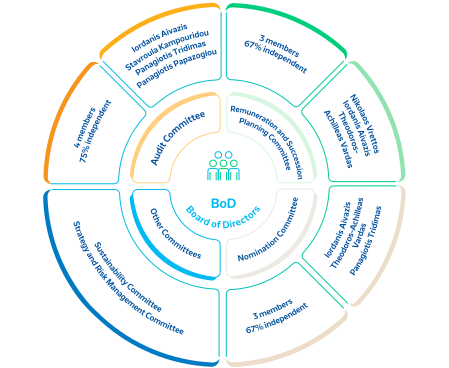
Nomination Committee
The Nomination Committee comprises of three (3) non-executive BoD members, two of which are independent. Mr. Iordanis Aivazis, Senior Independent Director, is the Committee’s Chairman and its members are Mr. Theodoros-Achilleas Vardas, non-executive member, and Mr. Panagiotis Tridimas, independent non-executive member.
The mission of the Nomination Committee, according to the criteria stated in the Company’s suitability policy, is to identify and nominate to the BoD individuals eligible for BoD and its committees’ membership and to opine on the suitability of the candidate appointed members that are nominated by the State. Furthermore, the Committee ensures the smooth succession and continuity of the Company’s BoD and evaluates the suitability, completeness and effectiveness of the existing BoD members.
Its main responsibilities are the following:
- Suitability assessment of Candidate BoD Members appointed by the Greek State;
- Election of Candidate BoD Members elected by the General Meeting of shareholders (Preparation, Candidates’ sourcing, Suitability Assessment, Nomination);
- BoD Evaluation (BoD Evaluation Policy, Annual Evaluation, External Evaluation, Committee’s self-assessment);
- BoD Training;
- Succession Plan;
- Supporting the BoD in implementing the Company’s Policy for Preventing and Managing Conflict of Interest Situations.
During 2025, the Nominations Committee held one (1) meeting, during which it examined the fulfilment of the independence criteria by all independent non-executive members of the Board of Directors for the year 2024 and informed the Board of Directors of its conclusion that the said members met the independence criteria, at the Board meeting held on 27.02.2025. All members of the Committee were present in person at the committee meeting. In addition, the Nominations Committee supported the Board of Directors during the evaluation process of the Board and its Committees, which commenced in December 2025 and was completed in February 2026 with the presentation of the evaluation results to the Board.
Furthermore, the Nominations Committee reviewed the fulfillment of the independence criteria of all independent non-executive members of the BoD for the year 2025 and informed the BoD on the fulfillment of the independence criteria of its members in question at its meeting of 26.02.2026.
Other BoD Committees
The work of the BoD is also assisted by other committees, set up by a decision thereof. Specifically, the current committees are the following:
Strategy and Risk Management Committee
The Strategy and Risk Management Committee was established in 2021, taking into account the requirements of the Company’s corporate transformation and the emphasis it plays on the management of risks and on changes of a strategic nature, which occur in the financial, economic, environmental, technological, political and social environment and may affect its activities overall, its business action, its financial performance, as well as the implementation of its strategy and the achievement of its goals. More specifically, with the corporate transformation and Vision 2025, the Company has entered into new business activities, which require the prompt identification and management of risks and the drawing of a strategy suitable for achieving the ambitious mid- long-term business goals, by planning appropriate investments and securing the necessary resources.
The mission of the Strategy and Risk Management Committee is, inter alia, to approve the corporate framework for risk management and the relevant policies and methodologies, to determine the level of risk appetite and the risk tolerance levels, to monitor and approve the management of significant corporate risks, as well as to oversee the implementation of effective risk management measures.
The composition of the Committee consists of: Andreas Shiamishis, Chief Executive Officer, as the Committee’s Chairman and its members Georgios Alexopoulos (Deputy CEO, executive BoD member), Theodoros – Achilleas Vardas (non-executive BoD member), Nikolaos Vrettos (independent non-executive BoD member) and Constantinos Mitropoulos (independent non-executive BoD member). The Committee met twice in 2025: on 03.06.2025 and on 05.11.2025, with the participation of all its members.
The most important issues on which the Committee was informed were the following:
- Implementation of strategy and preparation for the next business cycle.
- Group strategy on the Power & Gas sector.
- Updates on the advancement of Group transformation initiatives.
- Status of the implementation of the Group’s Risk Management and Regulatory Compliance framework, as well as matters related to Group insurance.
Sustainability Committee
By integrating sustainable development into its strategic plan, the Group’s core strategy addresses the key issues of sustainable energy access for all and climate neutrality, as well as the implementation of corporate governance principles. These governance principles prioritize safe, accident-free, and financially sustainable operations, while maintaining respect for both the environment and society. The Company and its subsidiaries are guided by their commitments outlined in the Sustainability Policy, which is also part of the Company’s Bylaws.
Subsequently, the Committee assumes responsibility for supporting the BoD in enhancing the Company’s sustained dedication to generating value across the three fundamental pillars of Sustainable Development: economic growth, environmental stewardship, and social responsibility. Furthermore, the Committee maintains oversight of the execution of responsible and ethical business practices pertaining to matters of Environmental, Social, and Governance (ESG) significance.
The Committee is composed of George Alexopoulos, Deputy Chief Executive Officer, serving as Chairman; Nikolaos Vrettos, an independent non-executive member of the Board; Konstantinos Mitropoulos, an independent non-executive member of the Board; and Anna Rokofyllou, a non-executive member of the Board. The Committee convened three (3) times in 2025: on 24 February, 17 September, and 3 December. At its first meeting, the Sustainability Committee ratified the 2024 Sustainability Statement. During the second session, the Sustainable Development Committee approved and amended the 2nd edition of the Operation Regulation for the Board of Directors’ Sustainability Committee. The final meeting of the year focused on the preliminary ratification of the Group’s Double Materiality Assessment outcomes for 2025.
Executive Committee
The Company operates an Executive Committee, the responsibilities and operating framework of which are determined by the Board of Directors, while its composition is decided by Management.
The Executive Committee is both advisory and executive in nature, as well as executive, to the extent that specific executive powers will be assigned to it by the BoD. It processes and shapes strategic issues on all sectors of the Group’s and its subsidiaries’ (domestic and international) business activities.
Indicatively (and without limitation), the Executive Committee’s main responsibilities are:
- Formulating the strategy and development plan for the Group’s activities, in the form of mid-term and annual business plans.
- Monitoring the progress of the works of all Group activities through financial results and KPIs.
- Monitoring, information and coordination on issues affecting the Group’s activities and requiring a well-coordinated approach by the entire Management team.
Executive Committee composition: | |
Chairman | HELLENiQ ENERGY Holdings S.A. CEO*, Andreas Shiamishis |
Vice-Chairman | HELLENiQ ENERGY Holdings S.A. Deputy CEO and General Manager Strategic Planning & New Activities, Georgios Alexopoulos, who will be acting for the Chair in any case of absence or impediment of his |
General Manager of Oil Products Supply & Sales | Konstantinos Karachalios |
Refineries General Manager | Georgios Dimogiorgas |
Deputy Refineries General Manager | Konstantinos Pandazis |
Acting Head of International Division | Georgios Grigoras |
Group CFO | Vasileios Tsaitas |
Group Human Resources & Administrative Services General Manager | Alexandros Tzadimas |
Group Legal Services General Manager | Ioannis Apsouris |
Group IT & Digital Transformation General Manager | Leonidas Kovaios |
Group HSE & Sustainable Development Manager | Antonios Mountouris |
Group Procurement Senior Manager | Gerasimos Stanitsas |
Group Corporate Affairs Manager | Sotirios Anastasiadis |
*Also serves as Chief Executive Officer of EKO ABEE.
BoD & Committees Evaluation / Individual Assessments
The BoD Assessment Policy and the Bylaws (Internal Regulations) adopted by the Company provides for the annual evaluation of the effectiveness of the Board of Directors (as a collective body), its committees and their individual members, while this evaluation is provided by an external consultant every three years.
After completing its first year of operation, the current Board of Directors, which was elected on 26 June 2024, carried out its second evaluation with the support of Egon Zehnder as an independent external advisor. The evaluation was completed in February 2026 and concerned the collective capabilities of the Board as a body, the capabilities of its Committees, as well as the individual competencies of its members. The process included the use of a confidential, specialized online questionnaire and individual interviews with all members of the Board of Directors and its Committees. The evaluation covered the key dimensions of the Board’s functioning, including its structure and composition, defined roles and relationships with executive management, operational effectiveness and meeting procedures, oversight of strategy, business performance and risk management, succession planning and leadership development, ESG readiness (environmental, social, and corporate governance matters), and the operation of the Board Committees. This was followed by in-depth, one-to-one interviews with all Board members to gather qualitative insights and further explore behavioral and operational aspects, the dynamics of the collective body, and the quality of discussions.
The results were grouped into five thematic pillars — alignment, effectiveness, balance of skills, engagement, and dynamics — and were presented to the Board of Directors at its meeting of 26.02.2026 for discussion.
The general conclusions of the evaluation are that the Board of Directors operates through effective and well-structured procedures, within a framework of collaboration and high professionalism. Its composition reflects the specific characteristics of the shareholding structure, ensuring operational continuity and the stability of corporate governance. The relationship between the Chair and the Chief Executive Officer is governed by institutional rigor and professional consistency, while the Board committees perform their duties reliably, in accordance with their prescribed mandates, with potential for further enhancement through more systematic practices. The overall functioning of the Board of Directors is characterized by constructive dialogue and the substantial contribution of its members to the smooth operation of the Company.
Suitability Policy
The Suitability Policy for the members of the Company’s BoD sets out the core principles and framework governing their selection, renewal of term of office and replacement, as well as the criteria applied for this purpose. The Policy follows best practices in corporate governance and is currently under review in order to incorporate more recent requirements, including those relating to the enhancement of gender-balanced representation. At the same time, it is aligned with the Corporate Governance Code applied by the Company, as reflected in its Corporate Governance Statement.
The purpose of the Policy is to set out:
- general principles and guidelines to the Nomination Committee for the selection, evaluation and nomination of candidate members to the BoD;
- criteria for the selection and assessment of the suitability of candidate BoD members;
- criteria for the assessment of the BoD members’ individual and collective suitability.
The BoD, through the Nomination Committee, is responsible for initiating, guiding and coordinating the process for the election of suitable candidate BoD members, subject to the shareholders’ rights.
Furthermore, the Nomination Committee receives a written brief by the Greek State (which, according to the Company’s Articles of Association, has a right to directly appoint BoD members on behalf of the shareholder, HCAP), which includes the ascertainment of the suitability criteria of the members to-be-appointed, in accordance with the Company’s suitability policy, as well as their detailed curricula vitae, and opines on it. The Committee’s positive opinion constitutes an essential precondition for the appointment of BoD members, as per the above.
The Nomination Committee is responsible for identifying candidate BoD members, who, in its view, meet the relevant criteria. The Nomination Committee’s nominations are submitted to the BoD, which introduces the nominated for election as BoD members, according to the Committee’s nominations, to the General Meeting of shareholders and the Company’s Articles of Association. The Committee’s positive opinion constitutes an essential precondition for a candidacy to be nominated by the BoD for election by the General Meeting of shareholders.
According to the Company’s Articles of Association, the BoD comprises eleven (11) members, of which four (4), at minimum, are independent non-executive members. The number of committees that will be operating in the framework of the BoD, or any need for assigning further special powers and authorities to its members, may be adjusted in accordance with its operational requirements, putting their knowledge, reputation and experience to use, pursuant to the present.
The suitability criteria set by the Suitability Policy are the following:
1. Individual suitability (Adequacy of knowledge and skills; Morality and reputation; Independence of judgement; Allocation of sufficient time)
2. Collective suitability
3. Diversity criteria. More information regarding the Policy and its content is available on the Company’s website “Suitability Policy”.
Diversity Policy
The Company regards the principle of diversity as a fundamental consideration in the composition of its governance bodies. Consequently, a formal diversity policy is implemented with the objective of fostering an appropriate degree of differentiation within the Board of Directors, as well as establishing a collectively diverse group of members. By assembling individuals who possess a broad spectrum of qualifications and competencies during the selection process for Board members, the Company ensures the incorporation of diverse perspectives and experiences. This approach is intended to facilitate well-informed and effective decision-making within the governance structure.
The Policy includes the basic diversity criteria, which are applied by the Company in selecting BoD members and constitute essential priorities (diversity goals) of the Company:
Adequate representation per gender; Ensuring equal treatment and providing equal opportunities to all potential BoD members, irrespective of gender, race, color, national, ethnic or social background, religion or convictions, property, birth, family status, diversity, age or sexual orientation. More information regarding the Policy and its content is available on the Company’s website, under the “Suitability Policy”.
It is noted that, in that direction, the Company strives to take into account the above in the Human Resources Management Procedures.
Selected diversity data regarding 2025 are presented below:
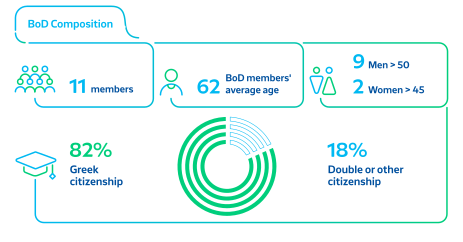
HELLENiQ ENERGY Group personnel data (31.12.2025)
Managerial level officers | Other staff | |
Men | 291 | 2,967 |
Women | 103 | 831 |
<30 years old | 1 | 197 |
30-50 years old | 177 | 2,611 |
>50 years old | 216 | 990 |
Doctorate (Ph.D) | 23 | 41 |
Post-graduate degree | 204 | 581 |
University degree | 153 | 601 |
ATEI degree | 7 | 766 |
High School graduate or lower education level | 8 | 1,808 |
Special Annual Report οn BoD Gender Balanced Representation
In September 2025, the Company published its Special Annual Report on gender-balanced representation on the Board of Directors, covering the 2024 financial year, and submitted it to the competent authorities.
According to the Report, throughout the period from 1 January 2024 to 31 December 2024, the Company’s Board of Directors ensured adequate representation of both genders, in line with the provisions of the Suitability Policy. Furthermore, taking into account more recent requirements aimed at further strengthening gender-balanced representation, the Board of Directors is considering potential adjustments to its composition within the applicable timeframe, with a view to continuously enhancing corporate governance and safeguarding its collective suitability.
Data on BoD gender balance representation as of 31.12.2025
Total number | Men | Women | Percentage of underrepresented gender | |
Members | 11 | 9 | 2 | 18% |
Executive Members | 2 | 2 | 0 | -% |
Non-Executive Members | 4 | 3 | 1 | 25% |
Independent Non-Executive Members | 5 | 4 | 1 | 20% |
Remuneration Policy
The Company has established, maintains and applies core principles and rules in determining the remuneration of the BoD members (“Remuneration Policy”), which contribute to its business strategy, long-term interests and sustainability.
The Remuneration Policy was approved, in its original form, by a decision of the Extraordinary General Meeting of the Company’s shareholders, dated 20 December 2019, and was amended to a limited extent and solely for the purpose of accommodating changes in the Company’s BoD following the amendment of its Articles of Association in 2021 by a decision of the Annual General Meeting of 30 June 2021.
The current Remuneration Policy was approved by a decision of the Annual General Meeting of 27.06.2024. This Remuneration Policy complies with the applicable regulatory framework and is aligned with the Company’s business strategy (especially after the Company’s strategic transformation and after taking into consideration the experience from the Policy’s implementation). The Policy is valid for four (4) years following the date of its approval, unless it is revised / amended earlier, by a General Meeting decision. More information regarding the Policy and its content is available on the Company’s Remuneration Policy.
Sustainability Policy
HELLENiQ ENERGY and its subsidiaries align their business activities with the objectives of the United Nations Sustainable Development Goals and the European Green Deal. Central to the company’s strategy are the critical issues of sustainable energy for all and climate neutrality, as well as the adoption of corporate governance principles that prioritize safe, accident-free, and economically viable operations, with due regard for the environment and society.
Specifically, HELLENiQ ENERGY and its subsidiaries are committed to:
- Adhering to legislative requirements and internal or other regulations to which the Group subscribes.
- Implementing and continuously enhancing the Management Systems for Health and Safety, Environment, and Energy by developing inspection, control, and certification procedures.
- Limiting incidents that jeopardize health, safety, the environment, and society, while maintaining preparedness for any emergencies.
- Reducing their carbon footprint with the objective of achieving climate neutrality by 2050.
- Employing methods to prevent and reduce emissions and waste throughout the value chain, ensuring the efficient use of energy and natural resources, and strengthening the circular economy.
- Protecting ecosystems and biodiversity, while implementing sustainable land and water use practices.
- Analyzing and assessing the risks and opportunities related to climate change with the aim of mitigating its effects and adapting to its impacts.
- Consulting with all social partners to create long-term value for the Group and society.
- Setting specific and measurable goals regarding sustainable development, monitoring progress, and presenting it based on internationally recognized reference standards, aiming for continuous improvement.
- Raising awareness and providing training to social partners and their suppliers/collaborators on ethical and responsible behavior throughout the value chain, eliminating all forms of corruption.
- Upholding human rights and respecting diversity and equality, eliminating all forms of discrimination throughout the value chain, including local communities, consumers, and partners.
- Defining clear roles and responsibilities for the implementation of the commitments of this policy, ensuring the availability of necessary resources.
- Maintaining systems for controlling and managing financial and non-financial risks, ensuring the sustainability of the Group, society, and the environment.
- Adopting best practices for sustainable development in procurement and marketing processes and throughout the value chain, providing safe, sustainable, and affordable energy products.
All employees and associates of HELLENiQ ENERGY and its subsidiaries are responsible for compliance with the Sustainability Policy. This policy was approved by the CEO and the Sustainable Development Committee of HELLENiQ ENERGY on 29 March 2024.
In the context of disclosing the progress and results of the implementation of its policy, the Company publishes its performance on an annual basis following recognized sustainability reporting standards such as the European ESRS, the international GRI Standards, the Euronext Athens ESG Disclosure Guide, the Greek Sustainability Code, as well as the principles of the United Nations Global Compact with the relevant progress report (Global Compact Communication on Progress – CoP).
The Company’s material sustainability topics, as well as the methods by which they are addressed, are presented in detail in the Sustainability Statement, which is part of the Annual Financial Report, in accordance with the European Corporate Sustainability Reporting Directive (CSRD) and the corresponding European Sustainability Reporting Standards (ESRS). Further information regarding the Sustainable Development Policy and Strategy is available on the Company’s website (Sustainable Development section).
BoD members’ compensation for their participation in the BoD and the Committees’ meetings in 2025
For fiscal period 01.01.2025 – 31.12.2025, the compensation paid to the BoD members is the one provided in the current Remuneration Policy.
The remuneration report for the members of the Board of Directors, pertaining to the fiscal year 2024 and most recently approved, was presented and deliberated upon during the Company’s Annual General Meeting held on 19 June 2025. At this meeting, shareholders representing 81.66% of the total share capital were in attendance. Of those present, 96.02% cast votes in favor of the remuneration report.
The remuneration paid to the Company’s BoD members for the fiscal period 01.01.2025-31.12.2025 include both a fixed, as well as a variable part. The 2024 remuneration report is available through the Company’s website, while the respective report for 2025 will be made available subsequent to its approval in June 2026.
The Annual General Meeting convened on 27 June 2024 granted approval for the implementation of a long-term scheme concerning the distribution of Company shares to executives of the Company and/or entities affiliated therewith. A comprehensive description of the scheme, together with its principal provisions, is provided in Section D, paragraph h, of the BoD’s Explanatory Report, in the 2025 Annual Financial Report. Owing to the specific structure of the free share distribution scheme, the shares designated for distribution shall become fully vested in the beneficiaries upon the conclusion of the initial evaluation cycle, namely on 31 December 2026, with the actual distribution of the shares to be effected progressively over the subsequent three-year period.
Further information regarding HELLENiQ ENERGY’s Corporate Governance is available on the Annual Financial Report 2025, as well as the Company’s website.
Management

Spilios Livanos
Chairman, Non-Executive Board Member
Spilios Livanos holds a BA in Politics and Economics from the University of Massachusetts at Amherst (USA) and an MA in International Relations from Reading University (UK).
He worked as advisor in the EU Commission’s Social Fund (Brussels) and as an executive on corporate development of private enterprises (Greece). In 2002, he founded a construction and real estate management company operating in Greece and abroad, which he runs until today.
He was elected as an MP for Nea Dimokratia in the national election of 2007 and of 2019 (region of Aetolia-Akarnania). In 2019, he served as parliamentary representative for New Democracy.
From January 2021 to February 2022, he served as Minister of Rural Development and Food.
In November 2022, he was elected Vice President of the North Atlantic Treaty Association (NATO) Parliamentary Assembly where he currently serves as Head of the Greek Delegation.
In his two terms as MP, he sat on the Standing Parliamentary Committees of “Defense and Diplomacy”, “Economic Affairs”, “Cultural and Educational Affairs”, “Public Administration, Public Order and Justice” and on the Special Standing Committee of the “Financial Statement and the General Balance Sheet and the Implementation of the State Budget”.
From 2016 to 2019 he chaired the Board of Directors of “Estia Panagiotis Kanellopoulos”.
Andreas Shiamishis
Chief Executive Officer, Executive Board Member
Holds an Economics degree specialising in Econometrics from the University of Essex, England and is a Fellow (FCA) member of the Institute of Chartered Accountants in England and Wales (ICAEW).
He began his career in 1989 with KPMG in London, specializing in banking and large multinational Groups before joining the international food and drink group DIAGEO in 1993, to assume senior Greek and European positions in Finance and Business development. During 1998-1999 he also worked for the development of the food sector business (Pillsbury) in Middle East and North Africa. From 2000 to 2002 he worked as Chief Financial Officer and Chief Restructuring Officer in an ASE listed high-tech company (part of LEVENTIS Group) and in 2003 he joined PETROLA HELLAS as Chief Financial and IT Officer.
After the legal merger and operational integration of PETROLA HELLAS with HELLENIC PETROLEUM, he was appointed as CFO of the new Group in 2005 and became a member of the Group’s Executive Committee. In 2012 he assumed responsibility for International subsidiaries and he was Deputy CEO during the period 2014-2015 and 2017- 2019 when he became CEO.
He is a founding member of the American Hellenic Chamber of Commerce (AMCHAM) board of Corporate Governance and is also a member in a number of professional bodies, including the Economic Chamber of Greece and ICAEW specialized faculties.
Since 2020, he has been elected to the BoD of the Hellenic Federation of Enterprises (SEV) and from June 2021 until July 2024 he was the President of the Business Council for Sustainable Development (SEV VIAN). Currently, he is the Vice President of the BoD of the Hellenic Federation of Enterprises.

Georgios Alexopoulos
Deputy Chief Executive Officer, General Manager Group Strategic Planning and New Business, Executive Board Member
As the Group’s General Manager of Strategic Planning and New Ventures, he is responsible for strategic planning, the development of new business activities, the electricity and natural gas business (Enerwave), renewable energy sources, and hydrocarbon exploration and production. He has been a member of the Executive Committee of the European Fuel Manufacturers Association as a full or alternate member since 2012. He has been an executive of the Group since 2007.
He held the position of Director of Strategic Planning and Development in an international group of companies (SETE S.A.), based in Geneva, Switzerland, from 1998 to 2006, while at the same time being responsible for overseeing the group’s energy portfolio.
Previously, he worked in a number of technical and executive positions at Stone & Webster, Molten Metal Technology, Merck, Dow Corning, and Dow Chemical in the United States between 1993 and 1997.
In July 2024 he was elected President of the SEV Business Council for Sustainable Development (SEV VIAN).
He holds an MBA degree (1998) from Harvard Business School and M.Sc. (1993) and B.Sc. (1992) degrees in Chemical Engineering from the Massachusetts Institute of Technology (MIT).

Ioannis Apsouris
General Manager Group General Counsel
Attorney at Law, qualified to plead before the Supreme Court, holds a Law degree from the Athens University and a Master’s Degree (DEA) from the University of Aixen Provence, France.
He was a partner at “Dryllerakis & Associates Law Firm”, handling cases of corporate, commercial and civil law. He is Chairman of the Board of Group’s subsidiaries ELPET BALKANIKI S.A., VARDAX S.A. and HELLENiQ ENERGY Digital Single Member S.A. and serves on the Boards of three other Group subsidiaries.
In January 2020, he was elected Chairman of the Legal Issues Group of Fuels Europe (Division of the European Petroleum Refiners Association). He is a member of the Hellenic Corporate Governance Council (HCGC) of the Athens Stock Exchange, member of the working groups on Corporate Governance and Industrial Permitting of the Hellenic Federation of Enterprises (SEV) and Vice Chairman of the Corporate Governance Committee of the American – Hellenic Chamber of Commerce.
He speaks English, French, Spanish and Italian.

Georgios Dimogiorgas
General Manager of the Group’s Refineries, Deputy CEO of HELLENiQ PETROLEUM S.A.
A Chemical Engineer (B.Sc.), a graduate of the POLYTECHNIC UNIVERSITY of NEW YORK, USA and a M.Sc. holder from the same university with a specialization in Process Design, Technical-Economic Studies, Thermodynamics and Business Administration.
In 1985, he was recruited to the former ELDA S.A. where he assumed various positions of responsibility until 1998.
From 1998 to 2007, he was appointed Deputy Director and then Director of Supply of Transportation, Sales and Risk Management to the Oil Supply and Trading General Division of HELLENIC PETROLEUM SA.
From 2007 to 2009, he served as Senior Manager of the Elefsina Refinery and until 2015, held the post of Senior Manager of the Group’s Industrial Installations at the Aspropyrgos and Elefsina Refineries, as well as Coordinator of the Supply Chain Optimization Project.
From 2015 to January 2019, he took over the Group’s Reorganization and Development Division and in 2019, the position of Senior Manager of the Group’s Refinery, Technical Support, R&D and Refinement Division.
Presently, he holds the position of General Manager of the Group’s Refineries and from early 2026, he has assumed the role of Deputy CEO on HELLENiQ PETROLEUM S.A.’s Board of Directors.
He has served as Chairman of the Board of Directors of the subsidiary Global S.A. of HELPE and as a member of the BoD of ASPROFOS S.A..

Konstantinos Karachalios
General Manager, Oil Supply and Sales16
He holds a bachelor’s degree in chemical engineering from the University of Surrey, a master’s degree in chemical Process Engineering from University College London, and an MBA in Finance from City University in London.
Having previously worked in the Finance and Consultancy industries, he joined the Group’s international Business Planning and Development team in 2005.
He has held the positions of CEO of Group affiliates Jugopetrol (Montenegro) and OKTA (Republic of North Macedonia), Director of Strategic Planning and Business Development for Group Commercial Units, as well as Finance Director for Refining, Supply, and Trade.
He has held the position of International Division Manager since 2018.
He serves as Chairman of the Board of Directors of EKO Serbia and EKO Bulgaria, as well as a Board Member of three additional affiliates.
As of September 1, 2025, he assumed the position of Deputy General Manager, Oil Supply and Sales and as of January 2, 2026, he assumed the position of General Manager, Oil Supply and Sales.
16 From January 1, 2025 until the end of 2025, Mr. Konstantinos Panas served as the General Director of Supply and Petroleum Product Sales.

Angelos Kokotos
General Manager Group Internal Audit
A Chemical Engineer with a Master’s in Business Administration, initially worked as an engineer before being promoted to Head of Handling & Losses at the Aspropyrgos Refinery and then as Manager of Human Resources.
He has worked for five years, respectively, as General Manager of Human Resources & Administrative Services for both the HELPE Group and DEPA.
He was Chairman of DIAXON SA.
Since 2015, he has held the position of General Manager of the Group’s Internal Audit.

Leonidas Kovaios
General Manager, Group CIO
Leonidas Kovaios is a graduate of Information Technology and Computer Engineering from the University of Patras and holds a MSc in Computer Science from the University of Waterloo, Canada.
He is an IT executive with more than 25-year experience in IT & Digital Transformation, as well as in IT management and has held leadership positions in large organizations.
In the course of his career, he held the position of CIO at Vodafone Greece and of Partner at EY as IT Technology Advisory lead.
He also held leadership positions at industry-leading IT Services Providers (SingularLogic, Intrasoft), managing large IT teams, as well as assuming full responsibility for business units providing services to customers in the public and private sector.
Since September 2019, he is the Group CIO at HELLENiQ ENERGY Group, leading Information Technology Services, Digital Transformation Programs and Cyber Security Functions.

Konstantinos Pantazis
Deputy General Manager of the Group’s Refineries
Konstantinos Pantazis has extensive experience in the refining sector, having held key leadership positions within HELLENiQ PETROLEUM S.A..
Since 2020, he has served as Aspropyrgos Refinery Manager, overseeing the safe and efficient operation of the facility and successfully delivering the largest turnaround in the site’s history.
On 22.07.2025, Mr. Pantazis was promoted to Deputy General Manager, assuming broader responsibilities in the coordination and operational oversight of the Company’s refinery activities.
His previous roles include Elefsis Refinery Manager (2018–2020), Operations Manager (2012–2017), and Commissioning & Start-up Manager for the Elefsis Refinery Upgrade Project, where he played a decisive role in operational stabilization, equipment reliability improvements, and the successful commissioning of new process units.
He holds a Diploma in Chemical Engineering from NTUA, an MSc from Imperial College London, and an Executive MBA from ALBA.

Alexandros Tzadimas
General Manager Group Human Resources & Administrative Services
He holds a degree in Chemical Engineering from the National Technical University of Athens (NTUA) and a Master’s Degree in Business Administration (MBA) from Strathclyde Graduate Business School.
He has 20 years of work experience in executive positions in Human Resources and has gained experience in the areas of labor relations, organizational development, talent development and change management.
He has also 7 years of experience in management positions in the commercial sector.
During his career, among others, he held the role of Deputy General Manager, Head of People and Organizational Development at Eurobank until 2013 and the position of Regional Human Resources Director at Colgate Palmolive South Europe from 2014 to 2020, where he oversaw the Business Units of Greece, Italy, Spain and Portugal.
At HELLENiQ ENERGY, since April 2020, he holds the General Manager position of Human Resources and Administrative Services of the Group.
Additionally, he is a Member of the Board of Directors of HELLENiQ PETROLEUM S.A., the largest subsidiary company of the Group, Chairman of HELLENiQ ENERGY Real Estate and CEO of HELLENI Q ENERGY Consulting.

Vasilis Tsaitas
Group CFO
He is a graduate of Business Administration from the University of Piraeus and holds an MBA from INSEAD.
He is a Fellow at the Association of Chartered Certified Accountants, with 20 years of experience in finance and strategy in the energy sector.
He started his career at Shell Hellas, where he held the role of Financial Controller.
He worked for HSBC investment banking in London, focusing on M&A advisory for European Oil & Gas and utility companies.
He also has professional experience in the development and financing of RES projects.
He joined the HELLENiQ ENERGY Group (former HELLENIC PETROLEUM) in 2011 and has been responsible for Investor Relations and international capital markets, participating in strategic initiatives of the Group.
Since February 2022, he holds the position of Group CFO.
05
ESG



Social